
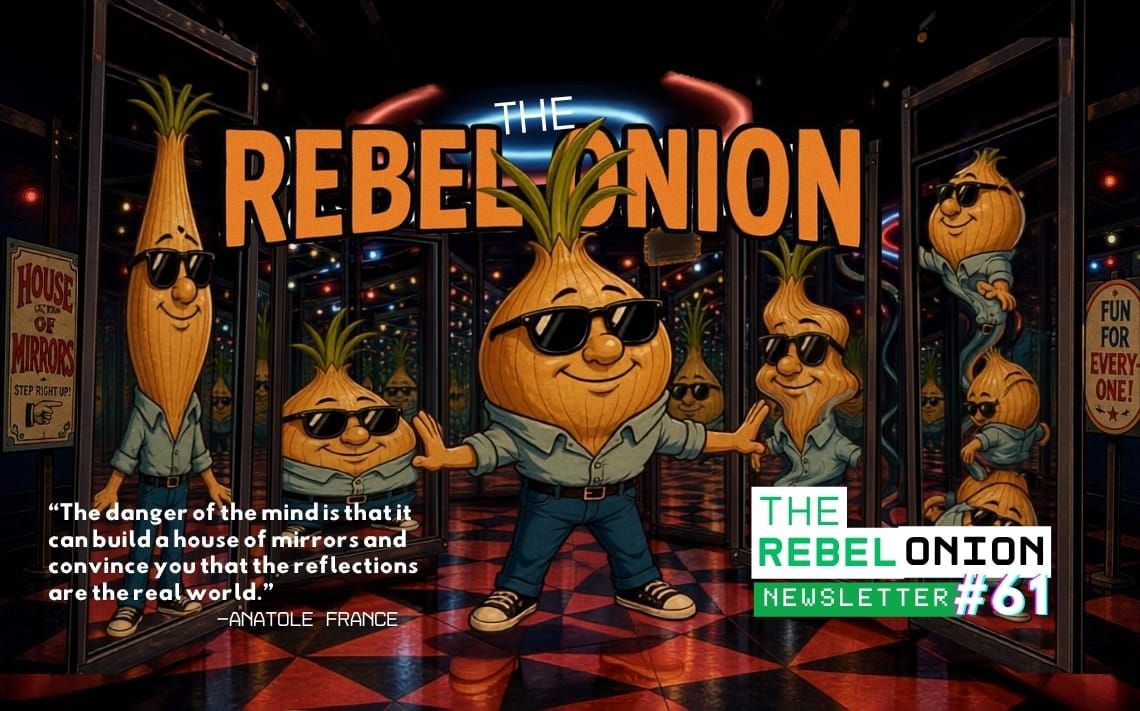
The Soil Layer: You Can't Grow in a Hall of Mirrors. #61
Stop chasing glossy reflections. Week 61 breaks down the hall of mirrors trap, Parker Palmer's 'Let Your Life Speak,' Dr. Goodman's take on discernment, and a wild 'God-instance' at a neighborhood park. Plus, the hand-carved AI pipeline behind 'The House of Mirrors.'

The same seed becomes a different plant in different soil.
Drop it in sand and it struggles. Drop it in rich ground and it takes off. Same seed. The difference was never the seed — it was what you planted it into. So after a year of peeling myself open in public — and more than a decade of the inner work before it — the question that stopped me this week was simple: what am I actually planting myself into?
The Funhouse
When I was a kid, I hated the mirror maze at the fair.
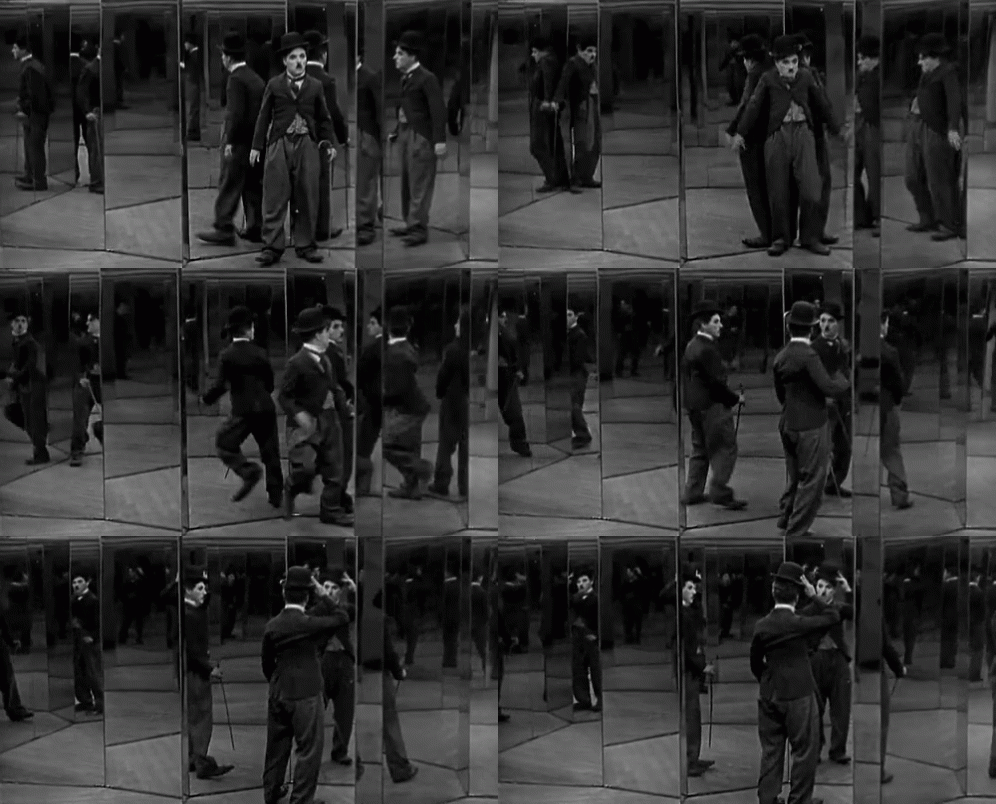
You know the one. Walls of glass with that dark yellow hue, muggy, streaked with finger smudges and random scratches — some of it a reflection, some of it an opening, and you can't tell which is which. Every direction looks like a path. Half of them are your own face. And if you move too fast, trusting what you see, you run straight into the smudged glass and mash your nose. I'd get stuck in there, turned around, a little panicked, hands out in front of me just trying to find something real to touch.

Fourteen years ago, in a Miami high-rise with an audiobook playing, I heard life described as a hall of mirrors — and it hit me hard enough that I stopped and wrote the line down. I didn't fully know why it landed. I do now.
RAIR Was the Maze
I spent five years in a mirror maze and called it a career.
The tech company, the partners, the rooms full of the right people — I moved to West Palm partly for the connections, because in a town like this one introduction gets you in the door. And the guys I built with were brilliant, each in his own forte. Same story, most of us: strict fathers, affluent family names behind us, each rebuilding something on our own, each quietly running closer to empty than we let on. Each of us on a mission to prove we could do it on our own, too. We had promise. What we didn't have was ground.
Because here's what I finally see. We weren't soil for each other. We were mirrors. Every one of us looked across the table and saw fertile ground — he's connected, he's from money, he's the one who gets me across — while doing the exact same math in reverse. Nobody was a door. Everybody was glass reflecting everybody else's hope back and forth. And you cannot grow a thing in a room like that. There are no nutrients in a reflection. That's why it came apart. I ran face-first into the glass for five years and called the bruises' strategy.
Put Your Hand Out First
The soil lesson isn't about effort. I've never lacked effort. It's about discernment — testing the ground before you plant.
In a hall of mirrors you don't move on what you see. You slow down. You put your hand out. You touch the thing before you commit your weight to it, because half of what looks like an opening is just your own face pointed back at you. I didn't do that in my twenties, or my thirties. I saw a room that looked like a door and I sprinted at it.
Now, before I take on a client, a partner, a project, a room — I put my hand out first. Not Neo stopping bullets in the Matrix — metaphorically. Is this real ground, or a mirror showing me what I want to see? Does this person give me back to myself, or just reflect my hunger? Rich soil was never proximity to money or names. It's proximity to people and rooms that put something into you instead of taking a reading off you.
And when I stopped chasing the glossy soil and looked down at what was actually feeding me — it was the simple things. My wife, who's real ground and always was. My son. Dr. Goodman, who reflects me back at my best instead of at my hungriest — and I do the same for him. This newsletter, and the strangers in ten countries and beyond who take something from what I plant here and give me nothing back but the knowing that it landed. None of it glamorous. All of it alive.
That's the soil. Not the maze. The ground you tested before you trusted it.
Still here — planted now, on purpose. Same peel, hand on REAL ground. Let's build from here. 🧅

Want to write through these same layers and make them your own?
The "Being Coached" Layer: Why Did It Have to Be Shiny?
I brought Dr. Goodman the hall-of-mirrors week, and he didn't go where I expected. He didn't ask about the partners or the company. He asked one thing: "Why did the room have to be shiny in the first place?"
That stopped me. Because he's right — I didn't pick those rooms for what they were built on. I picked them for how they'd look with me standing in them. "That's the whole trap," he said. "When you're hungry to prove something, you stop checking the ground and start checking the ceiling — how high it is, who else is in the room, what it says about you. You mistake the shine for the substance. And shine doesn't hold weight." He'd know. He told me he's watched brilliant people spend whole careers picking rooms by their reflection and wondering why nothing they built ever stood up.
Then the part that landed: "The fix isn't avoiding bad rooms. It's changing why you walk into a room at all. Stop asking what it makes you look like. Start asking if there's anything real under your feet."
The Takeaway for You: Look at how you actually choose — your projects, your partners, the rooms you spend your life in. Are you picking them for what they say about you, or for what's really there when the lights come up? Shine is usually there to cover for a lack of ground. Slow down before you walk in. Feel for the floor before you put your weight on it. The rooms worth being in are the ones still solid after the glow wears off.
Bookshelf Peeled - Unwinding the First Thought
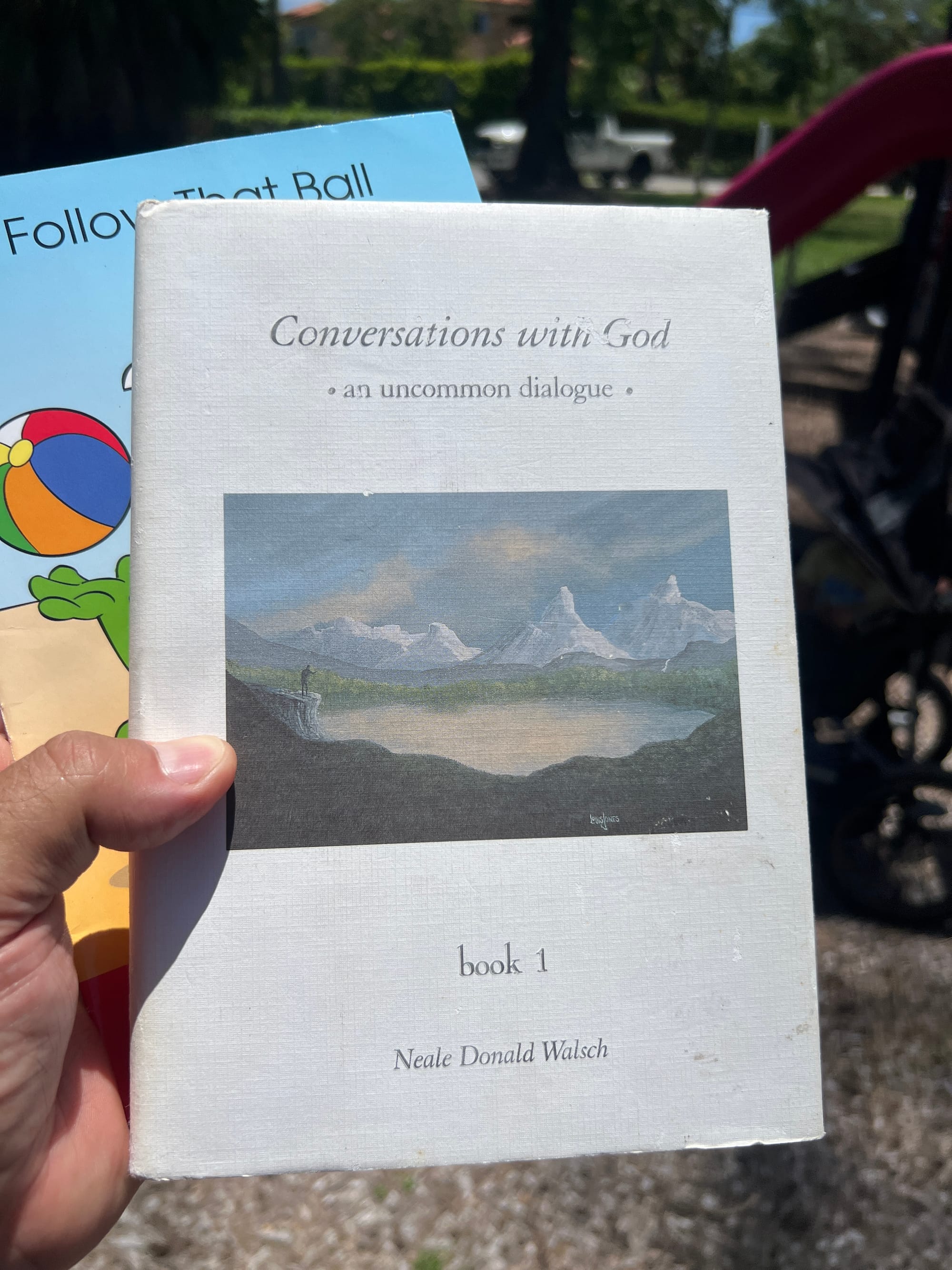
This is the book that gave me the hall-of-mirrors image fourteen years ago, so it had to be this week's pick. Walsch's Conversations with God makes a case that's stuck with me since: the pain in a situation usually isn't the situation — it's the judgment we stacked onto it. And that judgment sits on an older one, and an older one before that, all the way back to what he calls a "first thought." If that original thought was wrong, everything built on top of it just multiplies the error. The fix isn't rearranging the reflections. It's tracing the maze back to the first thought and correcting it there.
For five years in the tech maze, I kept stacking — new strategies, new decks, new partners — on top of one faulty first thought: I have to prove I can do it on my own. Built on that, every move just bounced off the glass. We mistake motion for progress, but in a hall of mirrors, speed only bruises you faster. Trace it back far enough and you realize you don't need a cleverer way through the funhouse. You need to step off the reflections and onto real ground.
The Takeaway for You: When you keep hitting the same wall, stop fixing the current reflection. Trace it back. What's the original thought driving the whole effort? If the root is fear, or proving yourself, or chasing someone else's reflection, no amount of work turns it into real ground. Don't stack more thoughts on an old error. Correct it at the root — and build from real soil.

Conversations with God: An Uncommon Dialogue, Book 1
By Neale Donald Walsch
Design Rebel: The House of Mirrors
This week’s core theme was sparked by a passage from Neale Donald Walsch’s Conversations with God on the concept of life as a hall of mirrors. I paired that philosophical foundation with the slightly traumatizing childhood memory of getting lost in sketchy fairground mazes—a memory that wasn't so pleasant back then, but served as the perfect metaphor for navigating false doors and chasing reflections in adulthood.
Behind the Build: Bringing this visual to life required far more than a single prompt. While Leonardo.ai, Veo 3.1, and ElevenLabs accelerated our raw assets, the real breakout happened in post-production. Everything was manually edited and synchronized frame-by-frame in Wondershare Filmora to protect the creative vision. AI generated the raw components, but the script pacing, emotional timing, and final intent remain entirely hand-carved. Let's dive into the pipeline.
Hall of Mirrors: Why You Keep Hitting the Same Wall
This Got Me Thinking:
Dr. Goodman calls them God-instances. Moments where synchronicities make you aware of some divine order — or just nudges of coincidence that show you life's alignments. I'm writing Week 61 and I remember a Word document I typed back in 2012, after a book that hit me hard, about walking through a hall of mirrors. I dug it up. Turns out I'd been paraphrasing what I heard, but that document is what inspired this whole week's dive forward.
Then came the God-instance. Later that same day I took my son to a neighborhood park with one of those little free-library birdhouses. Usually it's romance novels, kids' books, maybe a stray non-fiction. And on the exact day I'm writing about Conversations with God — the book I've only ever owned as an audio version — there it was. Free. Sitting there waiting for me.
Quite the surprise.
P.S. If this resonates with you, share it with someone. I'm dedicated to helping fellow explorers—or anyone who found this page—uncover their authentic self with humor and insight. We're all in this together, finding the courage to truly live from our core essence (or as close as we can get!).
The Root-Gift Layer: Roots That Feed the Ground Around Them
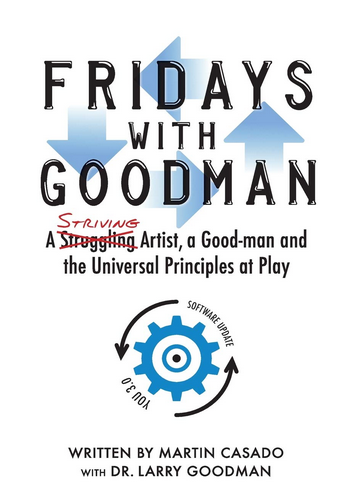
Fridays with Goodman: A striving artist, a Good-man and the Universal Principles at Play. by Martin Casado