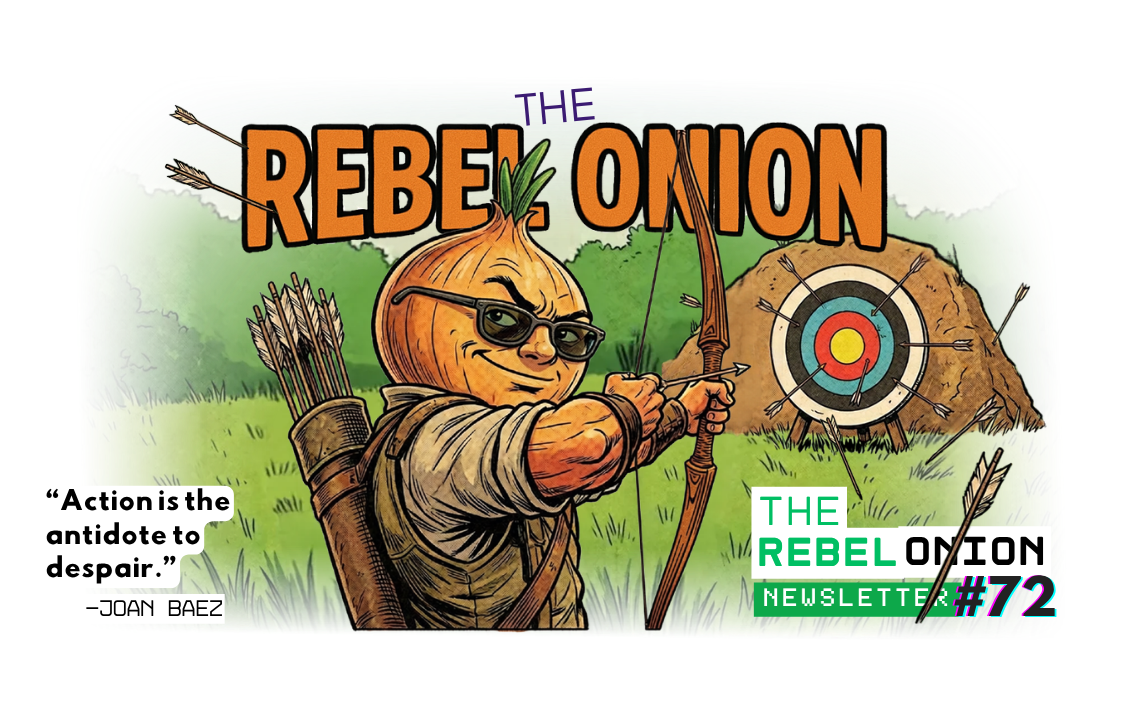
The Making Layer: Making Was the Amateur Question. Follow Through Is the Real One. #72
The making is no longer the hard part—it’s letting the work leave your hands and start living. Week 72 uncovers the orphan folders on your desktop, the clock ticking behind your craft, and why elegance without the courage to close is just performance. Let it ship. 🧅

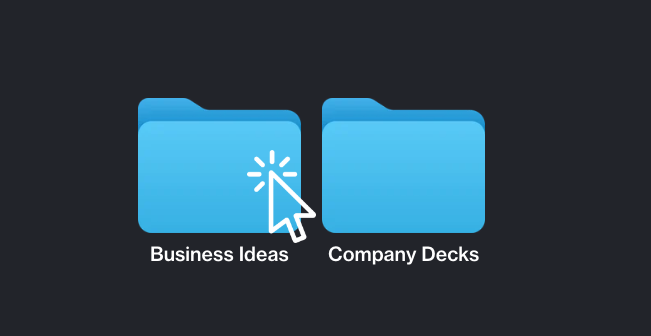
There's a folder on my computer with a full brand deck I built over the last couple years. Logo, product design, color system, photography direction, the whole treatment. It solves a real problem I personally had years ago. The world still needs this solution. The design is done.
The folder hasn't moved in a year.
That folder is not alone. There's another one with an app concept that uses AI in a way nobody else is building yet. There's a 71-week archive of this newsletter that could already be a book. There's a pile of shirt designs I'd love to print. There's a children's book forming through my son that I could hand-draw scene by scene because that's what I actually do. All real. All sitting. All waiting on something that isn't creative.
The Real Question at Week 72
I thought the hard part of being a maker was the making. Turns out that was the amateur question. I ship weekly. I've shipped weekly for 71 weeks straight. The making is not what's gating anything in my life right now.
The hard part is harder. When does the object leave your hands, and when does the commitment follow it? The deck is step one. The shipping into a market that may or may not catch it is the actual leap. Capital, logistics, partners, inventory, fulfillment, marketing, time I don't currently have. None of that is in Figma, Adobe or even Canva. None of it is in a Google doc. All of it is on the other side of a decision I keep almost making.
The Orphan Folder(s)
Every maker I know has one. Mine is deeper than it should be at this point.
A product from a wound I actually lived through. An app that would help real people manage real goals. A book of weekly work I've already written. Merch that would be fun to send out into the world. A children's book my son and I could make together that would outlive both of us.
They're not ideas. They're decks. They're drafts. They're mockups. They're ready. What they're waiting on isn't inspiration. It's a different muscle than the one I've been training. The muscle of letting something leave the studio and start to live its own life out there, with all the mess and risk and operational weight that comes with it.
The Market Tells You, Until It Doesn't
Here's the honest trap I keep running into. The market tells you what works, and 71 weeks of consistent craft with modest reach can read as "the work isn't landing." That's one version of the data.
The other version is that the market as it currently exists rewards performance over craft. It rewards whoever plays the social game best, not whoever makes the most honest thing. And I can't fake that part. Not yet. Maybe not ever. I don't have the stomach for performing for an algorithm. I'd rather keep making what I actually am and trust that eventually the signal finds its people.
Both of those things can be true. The market can be telling me something, and the market can also be a bad judge of what I'm actually trying to send. The job isn't to collapse one into the other. It's to hold both and keep making anyway.
The Clock
Here's the piece I usually keep offstage. The making matters because the people I love are on the other side of the leap.
My wife is working a job that isn't the life she wants. The plan has always been to build something that lets her come home. We have ideas for what the next chapter of our family looks like, homeschooling, more time, more room to shape our son's early years on our terms. None of that happens without the work paying its own way. Either the orphan folder ships. Or Nitram levels up into the kind of client work that carries the whole life. Likely both. Either way, the follow-through is the gate. The making is not an abstract craft question for me anymore. There's a clock. The clock is real. The clock is my family.
So the question isn't just "which object do I ship." It's "which object pays for the version of our life we actually want." That's a different filter than I've been using. More serious. Less precious. The slow honest work has to turn into something that moves the family too. That's not selling out. That's growing up.
The Vol. 2 Move
Not all four orphans. Not even two. Pick one. Give it a real shot. Not a side-of-the-desk, when-I-get-time, maybe-this-quarter shot. A real one, with a plan, with a window, with partners if I need them and capital if I need it and the willingness to let the first version be imperfect so a second version can learn from it.
I don't know yet which one. Could be the product. Could be a compiled version of this work. Could be a conversation with the right collaborator that unlocks the whole stack. What I know is that the next layer of making for me isn't insight to object. It's object to living thing. The release. The investment. The willingness to find out what the market actually does with it instead of protecting the deck forever by never shipping it.
You Too
You have an orphan folder. The side project. The business idea. The book. The thing you keep almost launching. The one you've described to friends at dinner for three years running.
Same question. Which one is yours, and what are you actually waiting for?
Not the next insight. You've had the insight. The leap isn't making it. The leap is letting it leave your hands and start to live.
Still here, folder open, finally ready to find out what one of these looks like out in the world. Same peel, done hoarding my own drawings. Let's build from here. 🧅

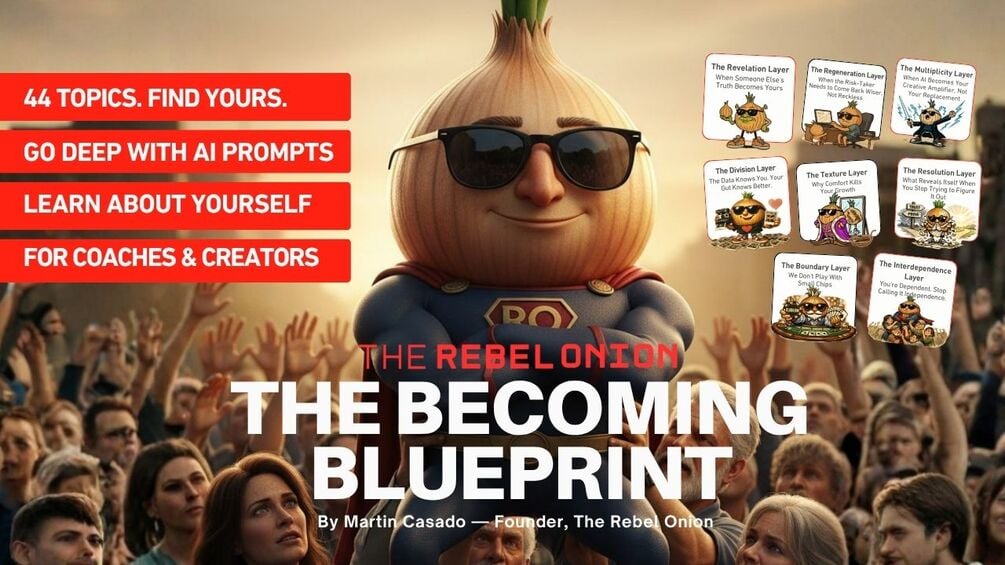
Want to write through these same layers and make them your own?
The "Being Coached" Layer: The Art Is Beautiful. Where Is the Close?
What you do in pure creative flow is elegant, but pure flow doesn't come with a price tag attached. When someone comes to you with a real budget and needs a campaign built, what does that do to your process? Does it slow you down or accelerate you? For me, it's always about a care plan, a specific set of skills mapped to a client's real needs. As that care becomes more refined, the price point goes up, and value is judged by the presentations that get closed. That skill is born out of ABC: Always Be Closing. The better you get at closing, the better the presentation gets, because a high-value offer forces you to sharpen every single move.
Your next shift isn't making the art more beautiful. It's creating the price point for the presentation you're actually making. You love when people appreciate how beautiful the craft is, but you're missing how compelling it needs to be to force a buying decision. You have the "Always" and the "Be," but the "Close" is missing. You need to get as excited about the close as you do about the presentation. Break the connection between price and the time it took you to build it. Time doesn't account for the 46 years of skill it took to deliver that result in a minute. I don't charge for the session. I charge for the outcome. The whole is greater than the sum of its parts, and it's time you start closing like it.
The Takeaway for You: Stop hiding behind the beauty of your drafts and start getting excited about the close. Beautiful work without a close is just beautiful work. The world is full of that. Disconnect your price from the hours spent, charge for the decades of mastery behind the outcome, and build an offer so clear the client closes themselves.
Bookshelf Peeled - Stay Small on Purpose
Paul Jarvis wrote Company of One in 2019 and asked the question nobody in the growth-at-all-costs economy was asking. What if the goal isn't to scale? What if the goal is to stay small, stay profitable, stay autonomous, and build a business that works for your life instead of eating it? He makes the case for solo operators and tiny teams as a legitimate end state, not a stepping stone to something bigger. For twenty years we've been told every business is a startup, every founder is chasing a Series A, every creator needs a seven-figure launch. Jarvis says no. Some of us built what we built on purpose, and the question isn't how to blow it up. It's how to make it last.
This connects to the orphan folder in a way that matters. The reason some of those shipped objects feel heavier than they should isn't the shipping itself. It's the implied escalator underneath. Ship a product and now you need a company. Build a brand and now you need to scale it. Launch a book and now you need a platform. Jarvis offers a quiet exit from that escalator. You can ship the thing, charge what it's worth, serve the people it was built for, and never grow a team you don't want. That's not failure to scale. That's a different kind of success entirely. And it rhymes directly with what Larry said this week. Charge for the mastery, not the hours. Build the package, not the session. The whole is greater than the sum of the parts, and Jarvis is one of the few business writers who gets that math.
The Takeaway for You: You don't have to become a company to build a product. You don't have to scale to succeed. Pick the smallest version of the thing that pays its own way, build it with the mastery you already have, and let it be exactly what it is. Growth is one option. Resilience is another, and for a lot of us it's the better one.
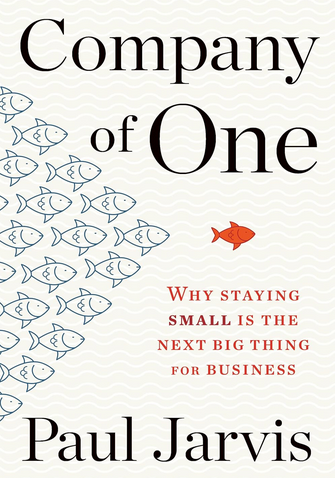
Company Of One: Why Staying Small Is the Next Big Thing for Business - by Paul Jarvis
Design Rebel: Every Missed Shot Carries the Next Release
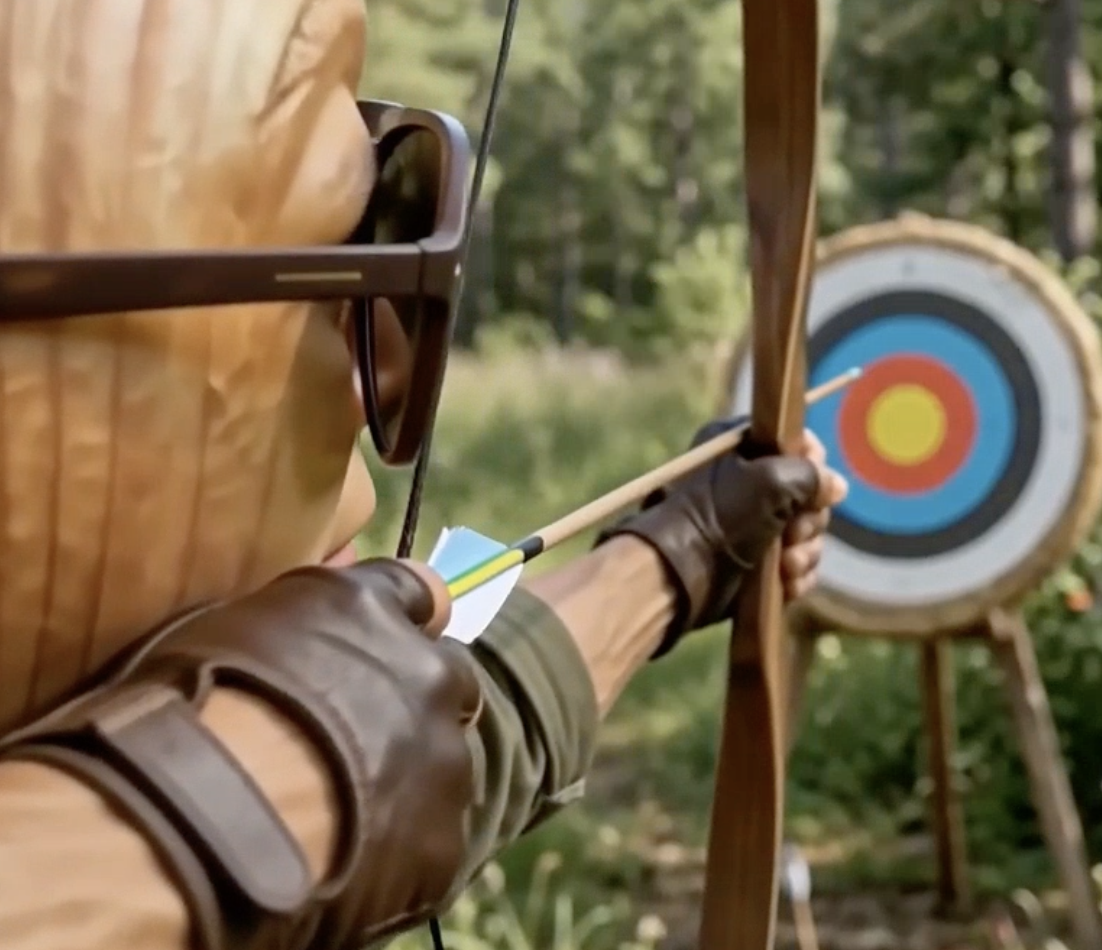
The hard part isn't the craft—it's having the courage to let the work leave your hands and start living in the real world. Archery inspired long time coming.
Behind the Build: Bringing this sequence to life required far more than a single prompt. While Leonardo.ai, Veo 3.1, and ElevenLabs generated the raw visual and audio assets, the real breakthrough happened in post-production. Every layer—from the tension-building whisper audio stack to the desktop folder opacity overlays—was manually edited, structured, and synchronized frame-by-frame in Wondershare Filmora to protect the creative vision.
This Got Me Thinking:
P.S. If this resonates with you, share it with someone. I'm dedicated to helping fellow explorers—or anyone who found this page—uncover their authentic self with humor and insight. We're all in this together, finding the courage to truly live from our core essence (or as close as we can get!).
The Repetition Layer: Mastery Is Devotion With Reps
Fridays with Goodman: A striving artist, a Good-man and the Universal Principles at Play. by Martin Casado