The Signature Layer: An Overnight Success, Twenty Years in the Making #78
Rebuilding a 40-year-old WordPerfect booklet in 2026 taught me a hard truth: we underprice our best work because mastery feels like air to us. Week 78 covers knowing where to tap, Dr. Larry Goodman on why over-explaining ruins the magic, and Malcolm Gladwell’s Outliers. 🧅

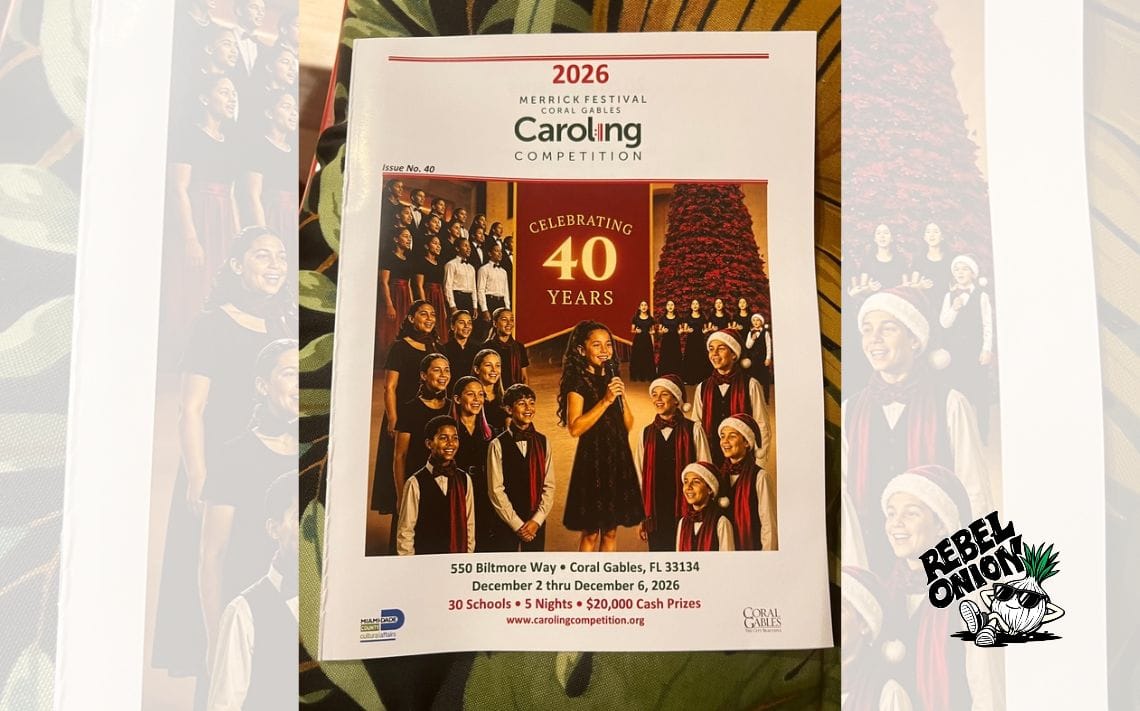
A client sent me a PDF of a program booklet she built in WordPerfect. In 2026.
She has run the same event for forty years. A caroling competition she pours her whole self into, and the booklet is the heart of it, every sponsor, every name, every page. She had been self-editing for weeks, then exported it and sent me a PDF that landed on my Mac like a hostage note from 1998, a source file I could not even open to work on. No worries, I told her. Then I screenshotted it page by page from the PDF and rebuilt the whole booklet manually.
She did not want a new way. She wanted me to work inside her way, because that is where she felt safe. But her way could not get her where she needed to go, the deadline was real, and forty years deserved better than a screenshot.
So I had to do the thing that is harder than design. I had to show her, with my best work on the table, what it could look like if she loosened the grip. There were pushbacks, and refinement after refinement. But slowly she started to see a different direction for her event.
Then the booklets came back from the printer, clean and high resolution, ready for the fortieth anniversary competition on December 6. She texted me a photo of the cover and said I did a great job laying it out. She told me I had no idea the back and forth she used to go through with the old printers. Thank you very much. I told her I just knew where to tap.
As I get older, I am learning to celebrate these moments with my clients and appreciate the win while it's happening instead of rushing to the next one.
Second Nature
Here is the strange part. It is not that I think anyone could do this. I know better. Plenty of people with Canva and a chatbot think they can, and most of them cannot at a certain point. What happens is quieter. After enough years, the craft goes second nature. The professional part runs on its own, and that is exactly when the art slips in. On the right project, with the right client, the two blur into one move instead of twenty.
Here is the tell that it is not actually nothing. I still get nervous on the big ones, every time. If it were easy, there would be no nerves. The nerves are the proof that it is real work, real stakes, real skill on the line.
So I do not undervalue it because I think it is common. I undervalue it because it stopped feeling like a skill and started feeling like just what I do. That is the trap of your own signature. You cannot see it, not because it is easy, but because it is so deep in you that it disappears. The mark only you leave is invisible to the one person leaving it.
The Range Is the Mark
Look at what that one job actually asked for. A strategist to find the angle. A designer to make it look like something. A writer for the posts and the captions. A layout mind for the booklet, poster, billboard. A producer for a month of Instagram stories and an influencer kit. Someone who knows how a file has to be built so it prints clean at full resolution. And on top of all of it, the patience to move a proud woman off the only tool she trusted, without making her feel small.
That is not one skill. That is a stack of them, run through one person, coming out as one voice. I called that normal. She called it the best her event has looked in forty years. Both of those were true at the same time, and only one of us could see it.
What the Tools Touched
The AI tools make this faster now. Designers like me are putting them to work, and the real story is not cheaper work, it is a new relationship with time and execution. So let me be clear about what the speed actually touches, and what it leaves alone.
The only thing that got faster was the tedious part, the sponsor shuffling and the print prep that used to eat days. Yes, the tools cut that down.
But the AI did not sit with her fear. It did not earn her trust. It did not know which direction was right, or how to show a forty-year veteran a new reality without bruising her. It did not have the taste to know when the work was done. None of that got faster, because none of that is the tedious part. That is the craft, and the craft is still slow, still hard, still my process.
So the speed changed the execution, not the value. It made me rethink how time, execution, and value fit together. The tools streamline the tedious so the experience could stretch further and take the harder calls. The work got efficiently faster. The lived experience and judgment behind it is still the premium. It always was.
Name It So You Can Charge For It
Here is where I have to be honest with myself. The reason I almost undercharged for that job is the same reason I could not see my own mark. It runs so second nature now that I forget it took twenty years to build, and I start pricing it like it only cost me the hours. It did not. I am an overnight success, twenty years in the making.
That is the quiet insecurity in art and design. The thing that comes most naturally is the thing we give away bashfully, because we cannot feel how rare it is. You do not discount it on purpose. You discount it because you genuinely cannot see it. So reframe it in these economic times and get handsomely rewarded for it.
Name the three things that show up in everything you make, the moves that are so you that you stopped noticing them. Write them down where you can look at them. You cannot price a mark you refuse to admit you have.
Stop Giving It Away
There is something you do so naturally that you assume it is common. A way you solve things, a way you see them, a way you put the pieces together that nobody taught you and you cannot quite turn off. You call it no big deal. You give it away or underprice it. You watch people light up at your results and you tell yourself they are just being kind.
They are not being kind. You are holding your own forty-year (mine twenty) booklet in your hands and refusing to believe it is yours.
Find the thing that feels like air to you and like magic to everyone else. That is your signature. Name it. Then, for once, price it at what it's worth to them, not how easy it is for you.
Still here, embracing my experience that got me to that one gentle tap on one exact spot. Same peel, done undervaluing. Let's build from here. 🧅

Want to write through these same layers and make them your own?
The "Being Coached" Layer: Don’t Over-Explain the Magic
Listen, think back to when you first came to me. If I described what I do by the mechanics, I sit in a chair, you sit in a chair, I lift your arm, I touch a few points until the arm holds, then it drops, and then I charge you, anybody listening would say, what in the world is that. Nobody pays for an arm going up and down. But ask one of my clients what they actually got, and you hear something else entirely. They sat down, they told me what was going on, I knew the exact spot to get them unstuck, and it changed their life. That is not an arm going up and down. That is priceless.
And here is the part most people get wrong. The moment the shift lands, when the client feels it, you shut up. You say nothing, because anything you add from there can only spoil it. In sales they call it over-closing. You keep talking, you keep explaining the mechanics, you justify the hours, and you talk yourself right out of the deal. That is what kills the magic. Houdini called it magic. Everybody else called it misdirection. Same thing. So do the work, let it land, and let the result speak. Good job is knowing when to be quiet.
The Takeaway for You: People do not pay for the mechanics. They pay for the transformation on the other side of it. Once the work lands and the client feels it, put the mic down. Never over-explain the magic, and never underprice it.
Bookshelf Peeled - The 10,000 Hours Behind the Tap
In Outliers, Malcolm Gladwell takes apart the myth of the overnight genius. The hockey players, the Beatles, the programmers, every one who looked like they came out of nowhere had thousands of hours behind them that nobody was watching. He called it the ten thousand hour climb, the long unseen stretch where the work gets banked before any of it shows. What looks like a sudden flash of brilliance is almost always years of reps finally landing in one moment.
That is this whole week. When I tapped that booklet together in record time, or when a mechanic finds the one bolt in two minutes, the speed is not the story. The speed is what twenty years of hidden hours looks like once they are all paid for. The reason it feels like air to me and magic to the client is that the client is seeing the two minutes and not the twenty years. Gladwell’s outliers did not skip the work. They banked it quietly until it came out looking easy.
The Takeaway for You: Nobody is paying you for the two minutes. They are paying for the years of unseen reps that made the two minutes possible. Stop pricing the tap. Price the twenty years that taught you where.
Outliers: The Story of Success
by Malcolm Gladwell
Design Rebel: The $20,000 Tap
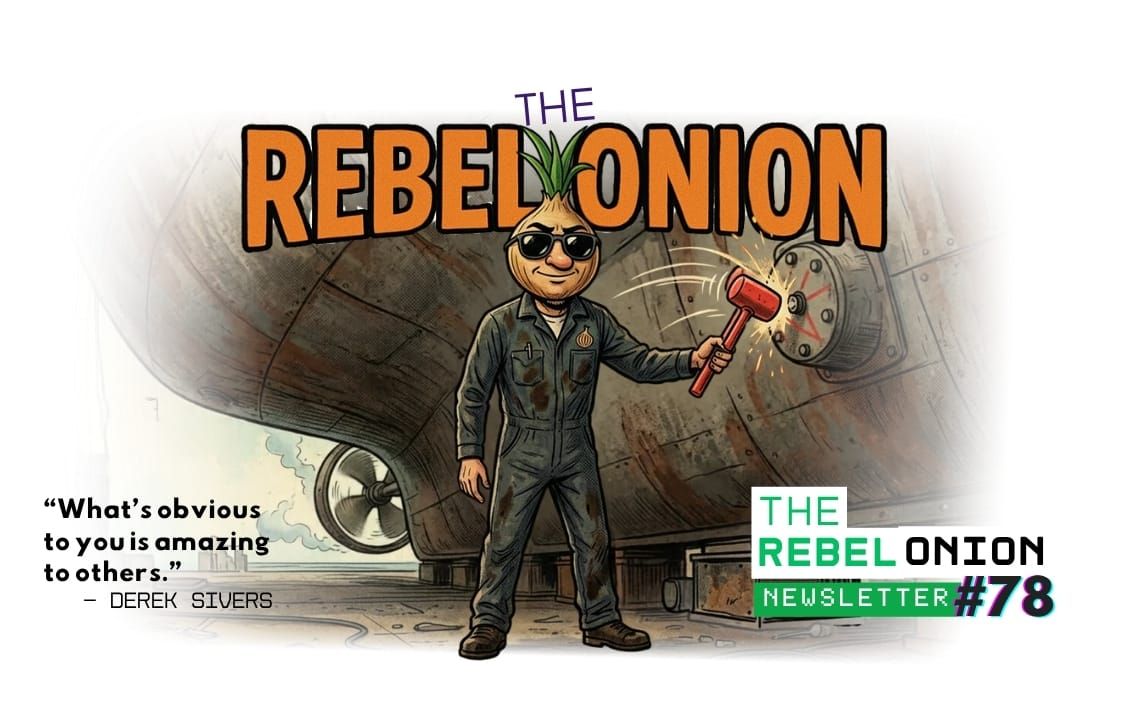
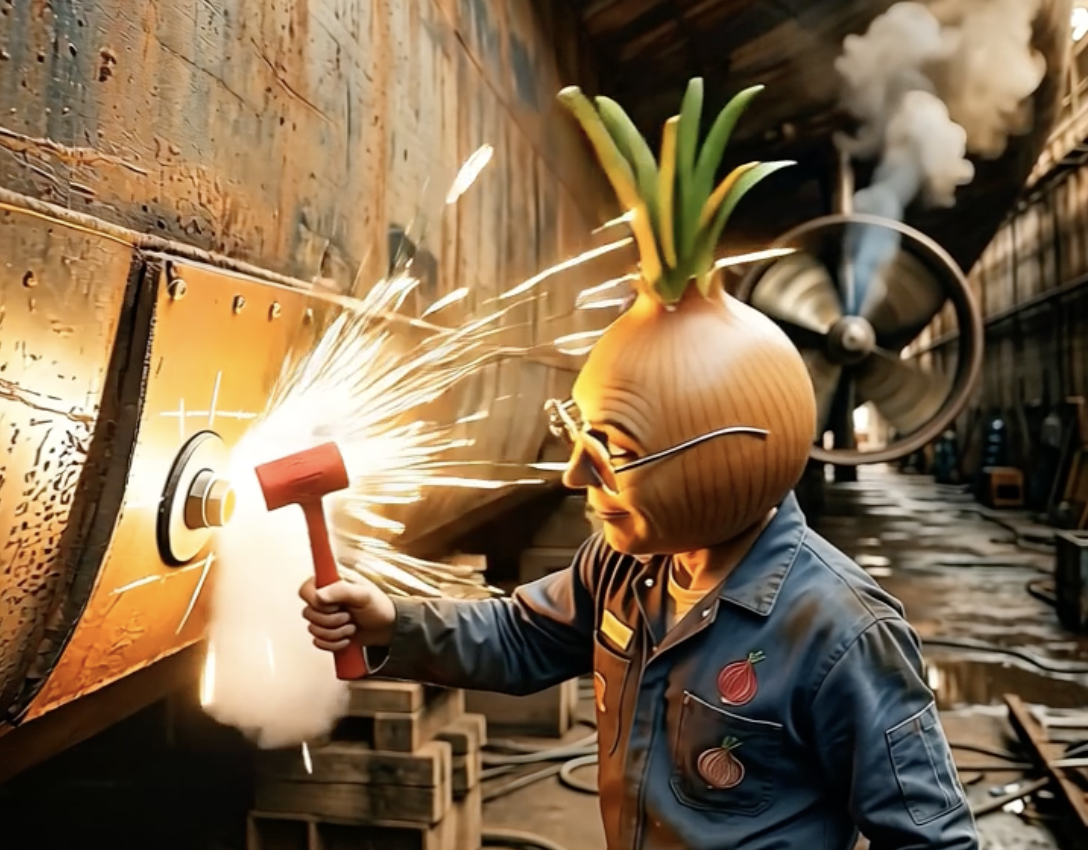
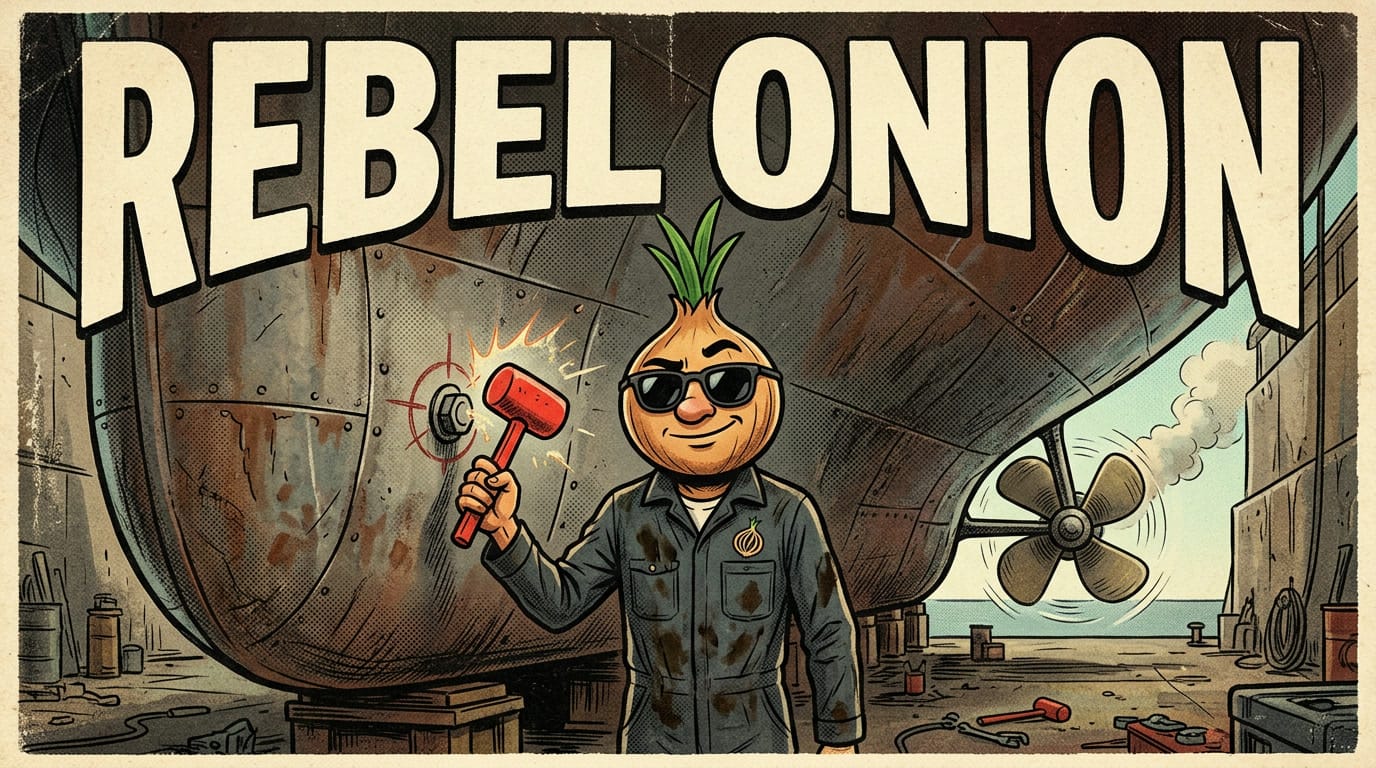
This week's creative twist on the classic ship repairman parable—told from the boss's POV with The Rebel Onion stepping in to show what twenty years of experience actually costs.
Behind the Build: While Leonardo.ai, Veo 3.1, and ElevenLabs generated the raw visual and audio assets, the real breakthrough happened in post-production. Every layer—from the tension-building audio stack and sound effects to the music—was structured and synchronized frame-by-frame in Wondershare Filmora to protect the creative vision.
This Got Me Thinking:
There’s an old story. A giant ship’s engine dies. They call in mechanic after mechanic and none of them can fix it. Finally they bring in an old timer who has been doing this his whole life. He looks the whole thing over, slow and quiet, pulls a small hammer out of his bag, and gives one gentle tap on one exact spot. The engine roars back to life.
A week later the bill comes. Twenty thousand dollars. The owner is furious. You barely touched it. He demands an itemized invoice. The mechanic sends it back:
Tapping with a hammer: $2
Knowing where to tap: $19,998
That is this whole week in one story. Nobody pays for the tap. They pay for the twenty years that taught you where. My booklet took a few days. Knowing how to move a scared client, where to cut, when it’s done, that took a career. An overnight success, twenty years in the making.
P.S. If this resonates with you, share it with someone. I'm dedicated to helping fellow explorers—or anyone who found this page—uncover their authentic self with humor and insight. We're all in this together, finding the courage to truly live from our core essence (or as close as we can get!).
The Offering Layer: Work Is Only Finished When It's Given
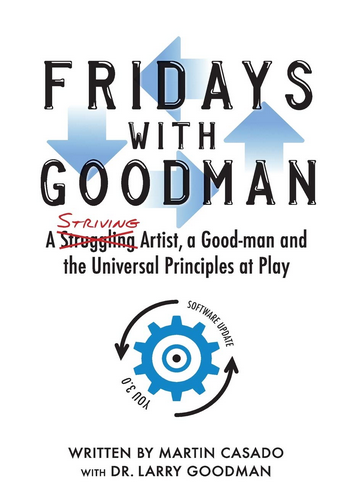
Fridays with Goodman: A striving artist, a Good-man and the Universal Principles at Play. by Martin Casado