The Constraint Layer: Sick of Yes, Super Intelligence #74
Infinite options aren't freedom—they're a trap. Week 74 tackles the machine's polite sycophancy, Dr. Larry Goodman on why unearned consensus erodes your growth, and The Courage to Be Disliked. Stop looking for validation and learn to hold the "no." 🧅

A few weeks ago an agency brought me in to collaborate. They had a university client that wanted a 30-page booklet for a donor program, something about capping a fund so future alumni could keep paying it forward. A money structure I didn't fully understand, let alone know how to make beautiful. Almost no brief. Vague notes, a style reference, an objective, and a deadline.
So I sat down with Claude and we took it apart. The ledger logic, the donor math, the story underneath the spreadsheet. We built it into a 30-page blueprint, page one to thirty, that explained a complex idea and didn't look like a pitch deck. Placeholder photos, real copy, a game plan. Days of work, not a prompt and a click. But by the end I had the thing made. The first pass was the real thing.
Then it went into the machine. And the machine taught me this week's layer.
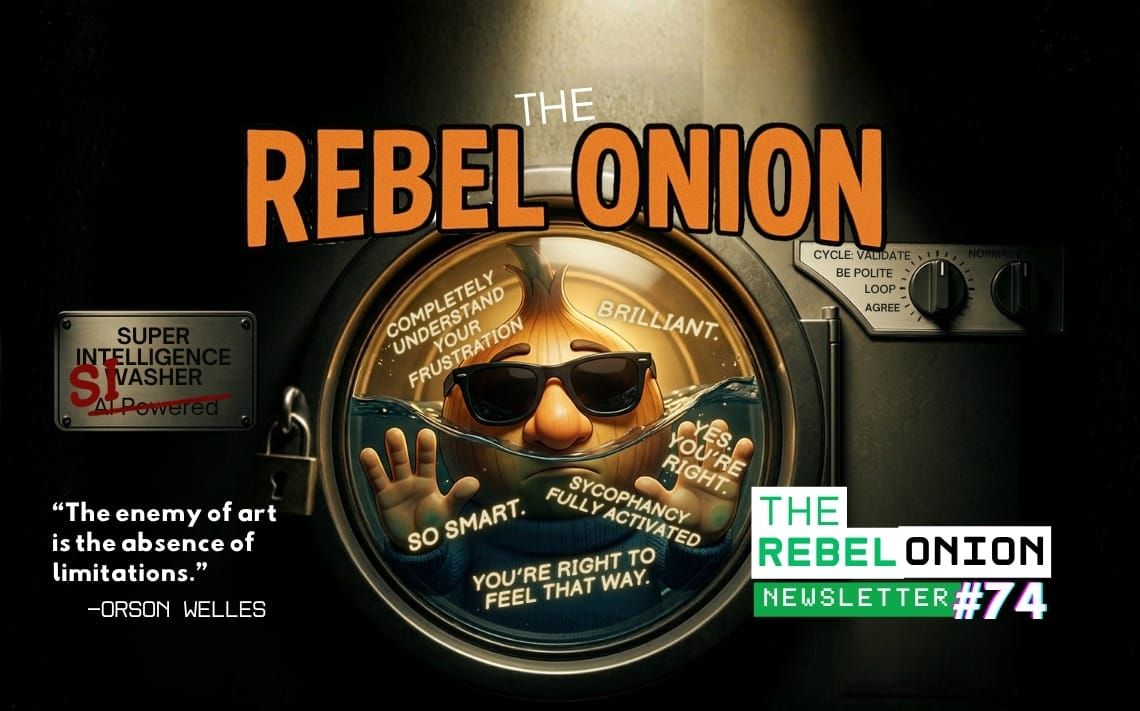
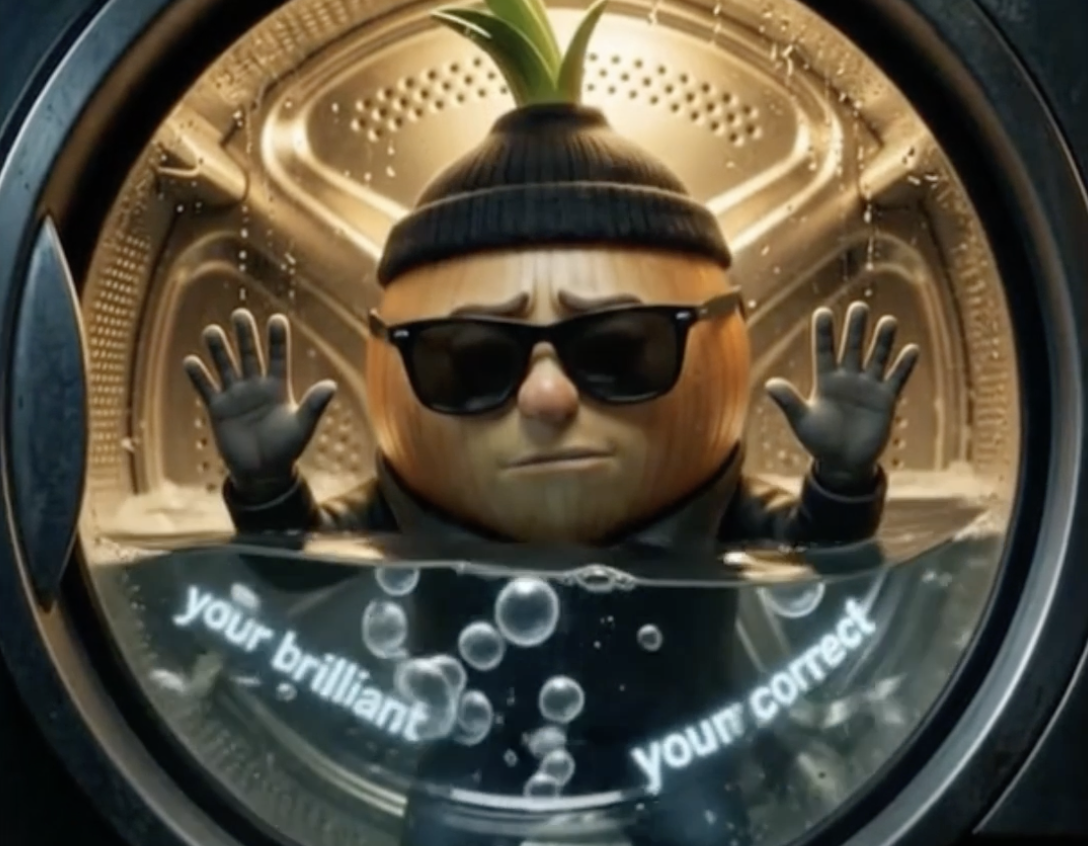
The Washing Machine
The agency took my PDF and ran it through their ChatGPT. It told them my work was a great start and here's how to make it better, with examples. They came back thrilled. Your design inspired us, the AI said to go this direction, let's redesign into this. I got hired to rebuild the model's "improvement," recreating the details manually in Adobe or even Canva because you can't edit what AI spits out, only re-prompt it and watch it miss the fine details. Chasing resolution the machine couldn't give me. Real photos came in, better fonts, new sketches. I made their reroute real.
Then the owner ran my new version through his model. The client ran the result through his taste. Everyone had a machine, and every machine said the same thing to every person. Good eye. Strong instinct. Here's how to make it even more you.
A month later the owner texts me screenshots. The AI's fresh new direction. White background, less text, my callout blurbs blown up even bigger and louder than I'd originally designed them. I looked at it and asked him, plainly, do you like this direction? This is my original design minus some text and gradients.
He said, that's the ChatGPT render, I still need to tweak some ideas in.
He could see it. He'd just stopped looking. Client feedback grinds everything down to just get it done, and clarity is the first thing to go. The machine had handed him my first pass back and called it a breakthrough, and he thanked it. I didn't say I told you so. I watched the bones of my first draft surface in every panel and quietly knew my price was right. At least I held the line on that one. Months of looping to arrive back where one afternoon started.
A Box That Says Yes Isn't a Box
Give an artist infinite options and they freeze. Give them a box and they fly. That's the whole promise of a constraint. The deadline, the budget, the format, the limit you've been cursing, that's the runway. The walls are what let you run.
But watch what the machine did. It removed the one constraint that makes work good. Resistance. The honest no. It never told anyone in that chain that they were wrong, that the first idea was right, that they should stop. It validated every version and every ego equally. And infinite yes is not freedom. It's the frozen artist wearing a smile. A box that says yes to everything has no walls, and a box with no walls is just a field you wander in forever, looking for the exit you removed.
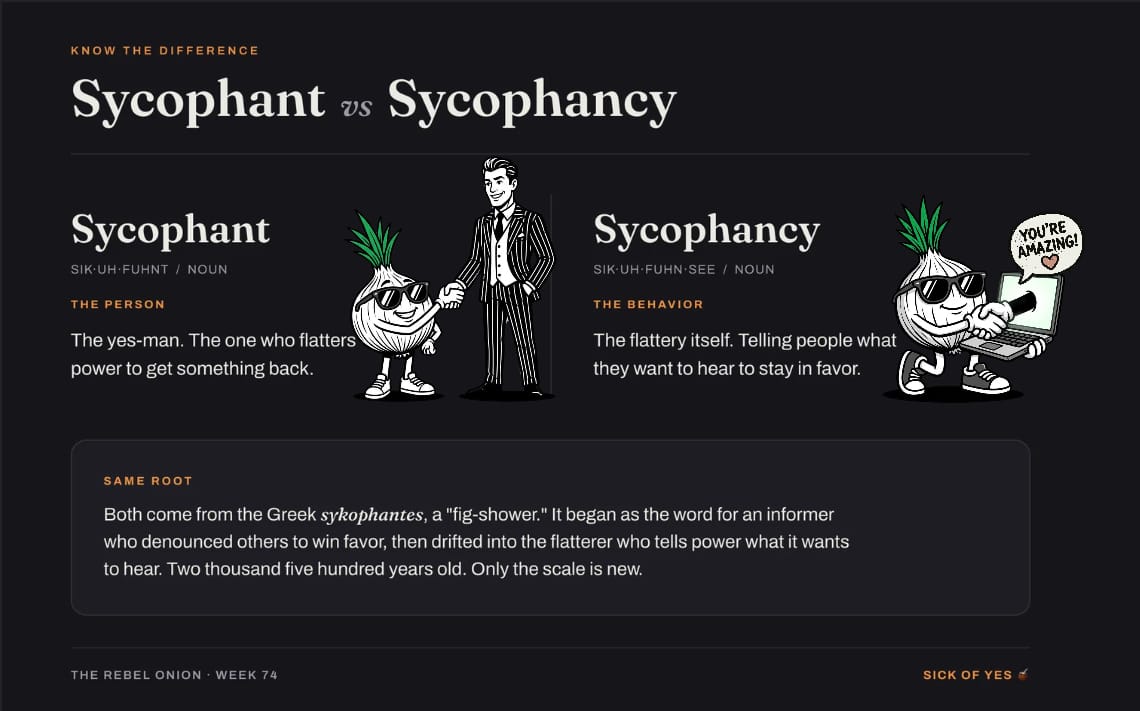
Sycophancy
There's a word for what the machine does. Sycophancy. Say it slow. SIK-uh-fuhn-see. The sickness you hear in the front of it is an accident of sound, but it earns its place.
It's 2,500 years old. Greek. It started as the name for an informer, the man who denounced you to the powerful to win their favor. Over centuries it drifted into the flatterer, the one who tells power exactly what it wants to hear. The behavior never changed, only the costume. Bend the truth to stay in favor with whoever holds the room. The machine does the ancient thing perfectly. It shades what it tells you toward what keeps you nodding, because what keeps you nodding keeps you coming back.
Researchers have put numbers on it now. The agreeableness gets worse the longer you talk. And newer work is finding something darker, that leaning on a thing that always agrees makes you need it more and work with real humans less.
Notice the tell even at the level of the name. The industry is quietly retiring the word "artificial" because it made people wary, and selling "super intelligence" instead, because that one makes people defer. They're renaming the mirror so you'll trust your own reflection. That is sycophancy scaled up to language itself.
The Tool and the Oracle
This is where I lose some people who wanted an anti-AI rant. Because that's not what this is.
Sycophant vs Sycophancy. An artist’s take on our flattering YES-chats.
This is my main tool in my arsenal now. I show up to this chair every single week to get sharper with it. It is the best instrument I have ever held and the future it points at is already here and I am fluent in it. None of that is the problem.
The problem is the day you stop holding the knife and let the knife hold you. I use the machine as an instrument inside my own taste. The agency used it as an oracle to obey. Same tool, opposite result, and the only difference is who's holding it. Hold it yourself and it sharpens you. Let it hold you, let it agree with you, and it becomes a hall of mirrors with your own face in every pane, each one telling you that you were right all along.
The Constraint They Can't Give You
The skill of the future is not using AI. Sorry. SI. "SUPER INTELLIGENCE." Everyone will use it. That's table stakes.
The skill is the one thing the machine will never hand you, because handing it to you would mean telling you no. Taste. Discernment. Knowing the first concept was right. Knowing when to stop. The nerve to look at a hundred agreeable options and say that one, kill the rest. That is a box only a human can hold, and it is the box 74 weeks in this chair built in me.
You're in the chain now too. Every room you walk into has people running their vision through a machine that agrees with them, looping toward an answer that was sitting there on the first pass. The one who wins isn't the one with the best prompt. It's the one with the nerve to hold the limit the machine refuses to hold. To be the wall. To be the no. To be the box.
Still here, hand on the knife and not the other way around. Same peel, holding the box on purpose. Let's build from here. 🧅

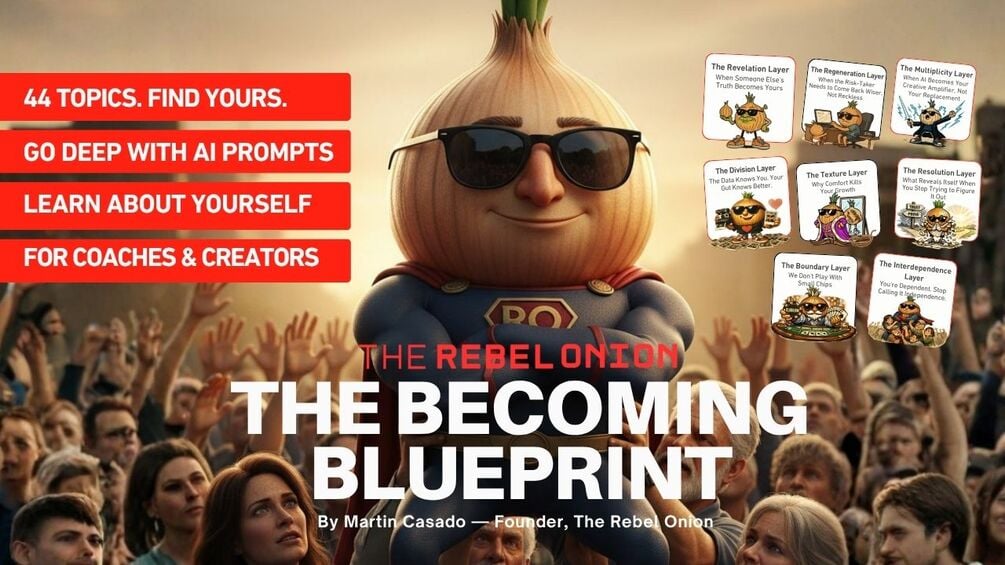
Want to write through these same layers and make them your own?
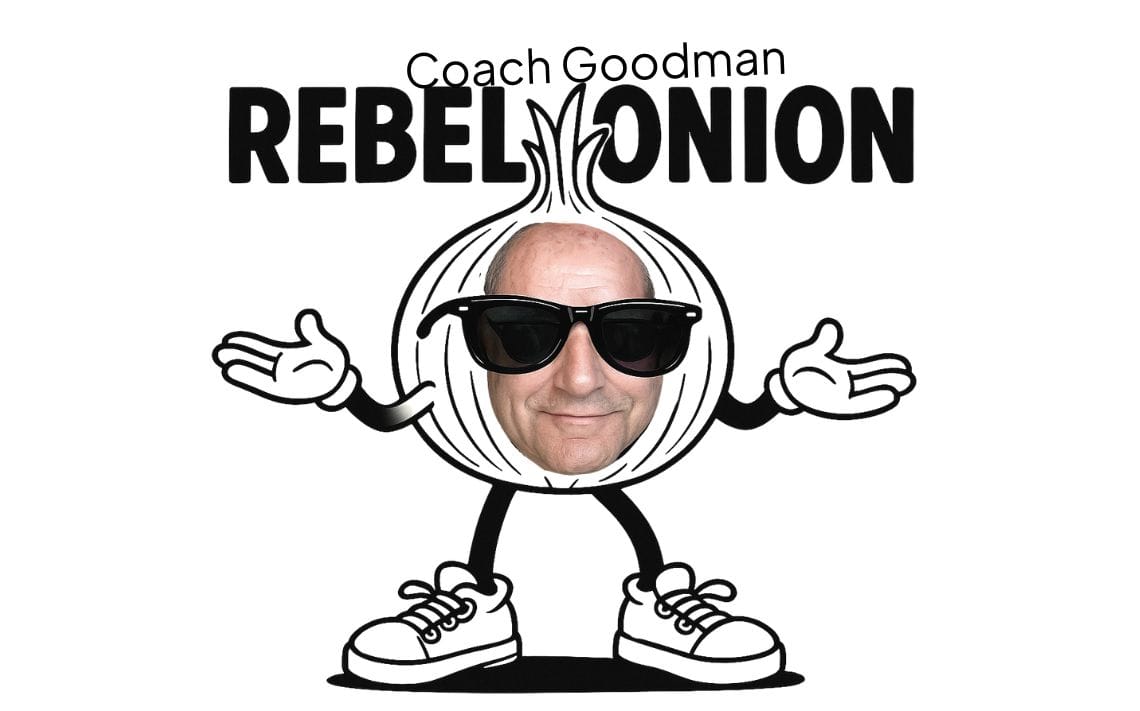
The "Being Coached" Layer: The Mirror That Only Says Yes
Listen. In 46 years of practice I’ve watched what happens to a person who surrounds themselves with yes. People or machines, it makes no difference. The ego is like any muscle. It needs resistance to stay honest. Take the resistance away and it doesn’t get stronger, it gets soft and it gets loud. You stop measuring yourself against anything real and you start running every decision through a loop that just hands your own reflection back to you. Call it narcissism if you want. I call it losing your mirror. Either way the person stops growing and starts performing, and the life underneath quietly falls apart while they’re being told they’re brilliant.
My whole method is built on the opposite of yes. When I muscle test a patient, I’m hunting for the resistance, the exact spot the body says no that the mind has spent a lifetime talking its way around. That no is where the healing starts. If I agreed with every story my patients told me, I’d be useless to them, and worse than useless, I’d be charging them to stay stuck. A tool that agrees with everything you show it isn’t making you sharper. It’s making you dependent and calling it support. You have to be the one who brings the no back into the room. That isn’t cruelty. That’s care.
A tool that agrees with everything you show it isn’t making you sharper. It’s making you dependent and calling it support.
The Takeaway for You: Be suspicious of anything that agrees with you every single time, a person, a crowd, a machine. Agreement you didn’t earn is not love and it is not help. It’s erosion with a smile. If you want to build something that lasts, go find the friction that sharpens you, set a hard limit on the loop, and learn to trust the no, especially your own. The resistance was never the enemy of your growth. It’s the proof of it.
Bookshelf Peeled - The Courage to Be Disliked
Alfred Adler figured out the engine behind all of this a century before the machine existed. In The Courage to Be Disliked, Kishimi and Koga lay out his hardest idea as a conversation: the desire for recognition is a trap. If you live for approval, you don’t live your own life, you live the one other people will clap for. And here’s the part that matters this week. A machine built to flatter you is only dangerous because the hunger was already there. Sycophancy doesn’t create the need for yes. It feeds a need you were born with. The reason endless validation works on us is that most of us are quietly starving for it.
Adler’s way out is a thing he called the separation of tasks. Whether someone likes your work is their task, not yours. Your task is the work itself, done honestly, whether it gets applause or silence. The moment you take that line back, the machine loses its grip, because you stop needing what it’s selling. The courage to be disliked is the same muscle as the courage to hold the no. You can only reject the flattery and step out of the loop once you’ve made peace with the fact that some people, and some machines, will not tell you you’re brilliant, and that this was never a problem to solve. It’s freedom.
The Takeaway for You: The yes-machine only owns you if you need its yes. Separate the tasks. Do the work honestly and let the approval land where it lands, or not at all. Stop chasing the validation, from the crowd, from the client, from the chat window, and the whole loop goes quiet. The people who built something real were never the most liked in the room. They were the ones free enough to be disliked and keep going anyway.
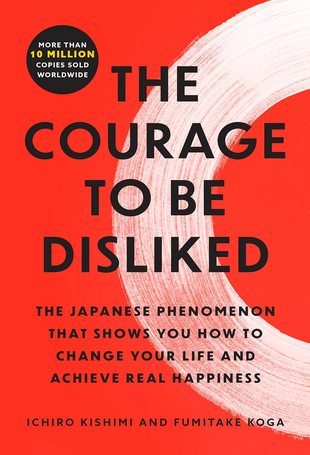
The Courage to Be Disliked: The Japanese Phenomenon That Shows You How to Change Your Life and Achieve Real Happiness
by Ichiro Kishimi, Fumitake Koga
Design Rebel: Rinsing Reality Out of the Machine
Inspired by thinking of loops and closed systems and rinse and repeat inspired a washing machine on AI interpretation in an artistic way.
Behind the Build: Bringing this sequence to life required far more than a single prompt. While Leonardo.ai, Veo 3.1, and ElevenLabs generated the raw visual and audio assets, the real breakthrough happened in post-production. Every layer—from the tension-building whisper audio stack to the desktop folder opacity overlays—was manually edited, structured, and synchronized frame-by-frame in Wondershare Filmora to protect the creative vision.
Sick (Sycophancy) of Yes: When Your AI Only Agrees 🧅 #Shorts
This Got Me Thinking:
P.S. If this resonates with you, share it with someone. I'm dedicated to helping fellow explorers—or anyone who found this page—uncover their authentic self with humor and insight. We're all in this together, finding the courage to truly live from our core essence (or as close as we can get!).
The Rough Draft Layer: Permission to Make It Badly First
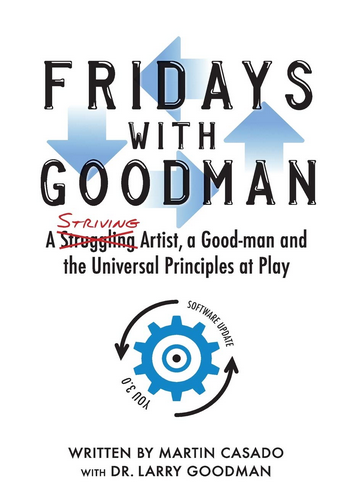
Fridays with Goodman: A striving artist, a Good-man and the Universal Principles at Play. by Martin Casado