The Infinite Layer: The Peeling Was Never the Point. #58
In Week 58, the deep peeling inverts outward. We break down why the peeling was never the point, Dr. Goodman's blueprint for creating an "unfair advantage" through listening, John Daido Loori’s The Zen of Creativity, and why it's time to stop digging and start launching.

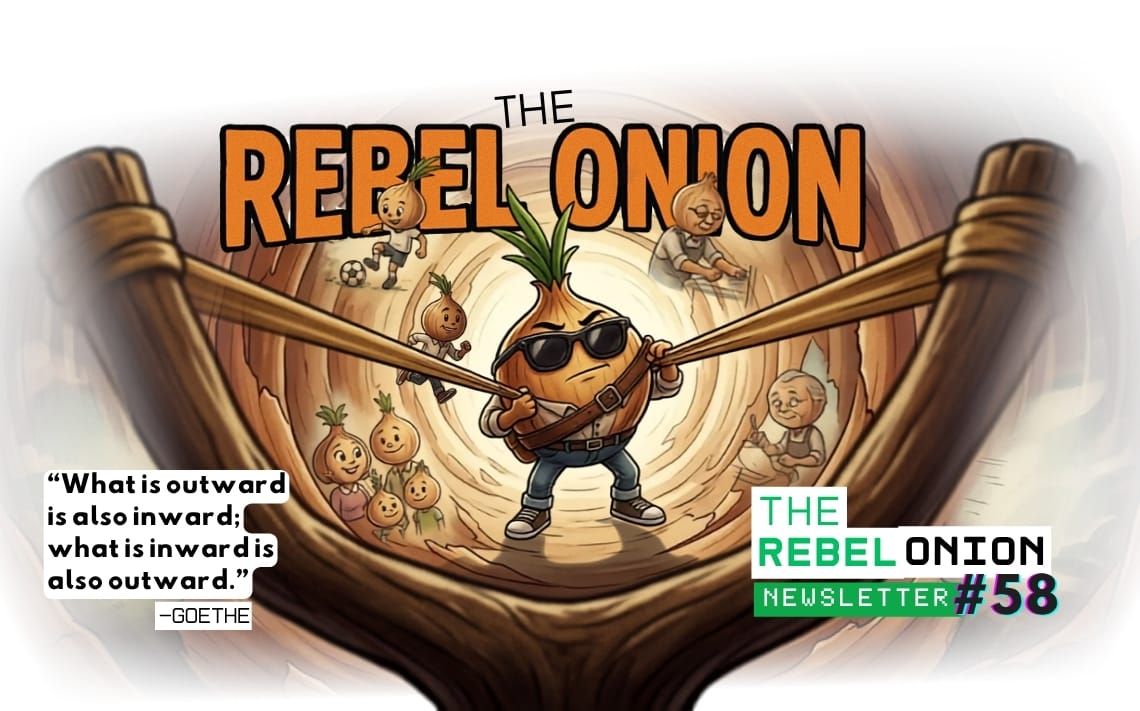
I spent 58 weeks looking for the bottom of this onion.
There isn't one.
Cut one clean in half and look at the center — the thing you'd call the core. It's not a core at all. It's the smallest layer, wrapped around an even smaller one, wrapped around a pale green shoot that was already reaching for the surface before your knife ever touched it. Keep peeling toward the "real you" and eventually you're holding nothing but a fistful of translucent skins and a face full of tears. The fully-peeled onion isn't enlightened. It's gone.
Which is a hilarious thing to realize 58 weeks into a project built entirely on the promise of peeling.
The Build I Wasn't Telling You About
Here's the part I haven't said straight out in 57 weeks. I wasn't only peeling. The whole time I was digging inward, I was building outward — a company. RAIR. DevDapp. Five years deep in Web3, building the kind of thing that's supposed to get bought by a giant or become the story everybody points to. A team. Investors. People I love who believed enough to write checks. I started this newsletter half-expecting to document that climb in real time — week by week, all the way up.
That's not the story that happened. The build came apart. By last November it was done.
It Was the Peeling All Along
Here's what 58 layers taught me about that: it wasn't a detour from the peeling. It was the peeling. The company was a layer too — a real one, good and bad, necessary. I didn't lose those years. I was being prepped. Every dissection in here, every week I thought I was just doing inner work, was teaching me how to carry what was happening on the outside — the calls, the highs, the slow unraveling, the end.
I don't go back to those years for the harm or the wrong calls anymore. I go back for the lesson and the blessing folded into even the worst of it. That's the only reason to ever look back.

Innerstanding
Somewhere in here I stopped reaching for the word understanding and a different one kept showing up uninvited: innerstanding. Not knowing a thing from the outside, where it stays a fact. Knowing it from the inside, where it actually changes you.
That's what the peeling was always for. Not to reopen the wound on a loop — to go in deep enough that the charge dissolves and what's left is wisdom you can use. A memory with the charge pulled out of it isn't a wound anymore. And wisdom doesn't grow downward.
It grows out.
From Peeling to Planting
So here's the turn — and honestly, it began around Week 53. For 58 weeks we peeled down and in. Now it's time to sprout up and out. The peeling cleared the false layers. The loss cleared the false certainty. What's left is the part that turns around and reaches for something other than itself.
And mine's already reaching. The company dissolved; the man who built it didn't. The thing I was building primed me to build the next one better. Nitram is sparking back up. The avenues are real. The action is outward now — and action, it turns out, was always the becoming. Not arriving somewhere perfect. Becoming the thing that keeps growing after the grand exit doesn't come.
And this was never just my onion. If you've spent a year — or five — peeling back what you were handed, at some point the peeling stops being the work. The work becomes what you grow with the space you cleared. You don't have to reach some finished, healed, perfect version of yourself before you're allowed to build. You build with the layers — the scars and the blessings. That isn't the consolation prize for the thing that didn't pan out. That's the whole point.

The layers from here won't go deeper. They'll go further. From who was I under all of that to what will I make now that it's gone.
The next chapter isn't another layer down. It's the green tuft, finally breaking the surface and reaching outward.
Still here. The deep peeling was the journey, and it all served its purpose. Same peel — we just invert it now, upward and outward, into action. Let's build from here. 🧅


Want to write through these same layers and make them your own?
The "Being Coached" Layer: The Unfair Advantage
Ask any good salesman what he wants most and he'll tell you straight: an unfair advantage. He thinks it's the pitch. The close. The right words at the right moment. It isn't. The real unfair advantage is knowing what the client wants before the client can even put it into words — and the only way you get there is by paying attention. Watching where they lean in, where they pull back, the moment they say "yeah, yeah" just to move you along. Everybody else in the room is waiting for their turn to talk. The one who's actually listening already knows how it ends.
Here's the part most people miss: that was never a sales skill. It's a life skill. The same attention that closes a deal is what makes a good partner, a good boss, a good father. Listening isn't the quiet part before you get to speak. It's the whole thing.
The Takeaway for You: Stop waiting for your turn to talk. In any room, the person listening hardest is the one who already understands what everyone else is still guessing at. That's not a trick, and it's not manipulation — it's attention. And it's the most unfair advantage there is.
Bookshelf Peeled - The Raw Material of Expression
In The Zen of Creativity, John Daido Loori reframes the creative process as an unblinking mirror of your current internal state. He introduces the "artless arts"—practices where you stop trying to manipulate an outcome, and instead trust your baseline nature to bring forth what is necessary. Loori notes that true creation should happen as naturally as growing your hair. The work always reflects exactly where you stand, meaning you cannot hide behind an old narrative of trauma once you commit to outward action.
This is the exact structural pivot required when your phase of heavy inward peeling ends. The space you cleared through past losses isn't an empty void to be mourned; it is a fertile landscape, and the mirror of your work is ready to show a new reflection. You don't need to force the growth or wait for a flawless, perfectly healed version of yourself before you begin again. Trust the momentum of the man who survived the unraveling, turn your focus outward, and let the action break the surface.
The Takeaway for You: Stop waiting for a perfect, wound-free version of yourself to appear before you permit yourself to launch the next project. The false starts, the disruptions, and the hard endings are the exact raw materials you need for the next build. Neutralize the emotional charge of what didn't work, gather the hard-earned wisdom left behind, and start planting in the space you just cleared.
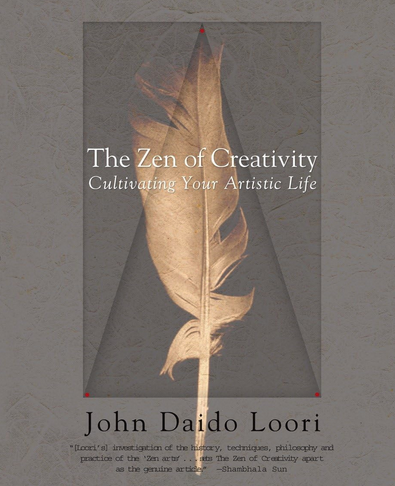
The Zen of Creativity: Cultivating Your Artistic Life
by John Daido Loori
Design Rebel: Stop Digging. Start Launching.
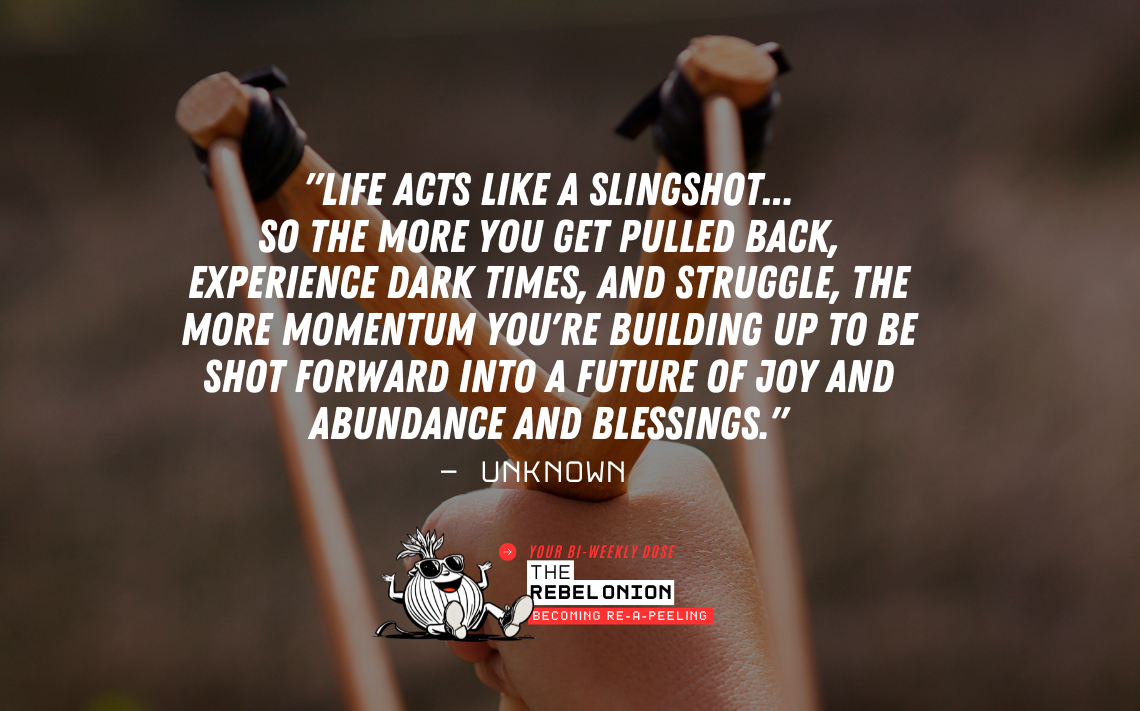
I spent a year treating the past like a rope to climb down, convinced that if I just dug deep enough, I’d reach some perfect, enlightened baseline. Turns out, it’s just exhausting. I realized the peeling wasn't a trap to live in—it was a slingshot. You don't revisit the past to stay there; you revisit it to gain the tension, drop the weight, and launch yourself forward.
Behind the Build: Bringing this week’s visual to life required more than a prompt. While I use Leonardo.ai, Veo 3.1, and ElevenLabs to accelerate the workflow, the creative vision is entirely hand-carved. I’ll walk you through the post-production pipeline—how I assemble these frames to keep the emotional intent, not just the AI output.
This Got Me Thinking:
P.S. If this resonates with you, share it with someone. I'm dedicated to helping fellow explorers—or anyone who found this page—uncover their authentic self with humor and insight. We're all in this together, finding the courage to truly live from our core essence (or as close as we can get!).
The Surface Layer: Breaking Through Into the Light