
The Depth Layer: The Struggle Was a Story. Not a Law. #57
Reveals why the deepest layer of healing can turn into hiding. We break down the 40-year script that struggle is the price of admission, issue a raw apology to money, look at Bob Dylan’s creative shift via Dr. Goodman, and map out Ayn Rand’s antidote to unearned guilt. 🧅


You can stop peeling an onion at any layer.
For fifty-six weeks I kept going. Deeper and deeper, layer by layer, naming things in public that most people won't admit in private. And somewhere around the one-year mark, something shifted. I realized I had reached the layer where going deeper was no longer healing.
It was hiding.
There's a difference between depth that serves you and depth that becomes a sophisticated way to avoid the thing you actually need to do. The peeling got me here. Every layer cleared the way for the next. But at some point the digging stops being discovery and starts being delay.
This week isn't about going deeper into the past. It's about going deep enough to find the one belief still quietly running the show — naming it, releasing it, and walking forward without it.
The Memory Without the Charge
Dr. Joe Dispenza has a line that reframes the entire idea of depth: a memory without the emotional charge is called wisdom.
That's the whole point of the peeling. Not to keep reopening the wound. To go in deep enough that the charge dissolves — and what's left is no longer pain. It's wisdom you can actually use.
Most of the layers I went into over the past year were real in the moment. The warehouse. The father. The dissolved tech company. The years of building in other people's hands. But going back to them now, the charge is mostly gone. They don't sting the way they used to. They've become information instead of injury.
That's what depth is supposed to produce. Not more digging. A neutralized charge. A memory that finally became wisdom.
And when the charge is gone, you stop needing to keep visiting it. The layer served its purpose. It got you here. You can let it go.

The Belief Still Running
But there was one layer I kept circling without fully naming. Not because it was painful. Because naming it would require me to actually change something.
The belief that it has to be hard.
That reward only comes through suffering. That you have to earn it through enough struggle first. That life comes in levels and you don't deserve the next thing until you've bled enough for it. When you get to X, then you're allowed to have Y.
I know exactly where it came from. Growing up in my father's world, work was never just work. It was constant. Relentless. At the house, especially the weekend place in the Keys, he barely hired anyone — we did all the maintenance ourselves. In a boat engine compartment all Saturday. Something always to be built or fixed. And at the family company, the warehouse and the office, the same relentless pace — one day the alarm clock that woke me for work went off again when I got home twenty-four hours later. Nothing was ever just handed over. Nothing came easy. Everything had to be earned the hard way, through sweat, through exhaustion, through never being allowed to simply receive.

That wired something deep. A program that says struggle is the price of everything worth having.
And here's the thing about that program — it's not even fully anyone's fault. It was just modeled. Hard work as the only acceptable currency. But modeled or not, I've been running it for forty years. And it has me convinced, at a level beneath conscious thought, that if something comes easy it doesn't count. That I haven't suffered enough yet to deserve the reward.
That's the depth layer. Not the wound. The belief that the wound was the price of admission.
Apologizing to Money
I was listening to a coaching session with Joe Hudson recently (big fan now). He was working with a woman who had built an entire structure of beliefs around why making money had to be hard — projections, stories, a whole architecture of struggle attached to the thing itself.
And he asked her to do something I haven't been able to stop thinking about.
He asked her to apologize to money for the projections she had put on it.
Not a metaphor. An actual apology. For all the stories she had attached to something that was, in the end, just energy. Just exchange. Just a tool. She had loaded it with shame, with fear, with the belief that it had to be wrestled and suffered for — and none of that was money's fault. It was the projection.
So here's mine. An apology to money for everything I projected onto it.
I'm sorry I made you the enemy. I'm sorry I decided you had to be hard. I'm sorry I tied you to suffering and convinced myself I had to bleed before I was allowed to receive you. I'm sorry I made you a measure of whether I'd struggled enough to deserve a good life. You were never the problem. The story I wrapped around you was.

That's the deepest layer. And naming it is how you start to release it.
How Far Down Are You Willing to Go
Here's what the depth layer actually asks — and it's not what you think.
It's not how far down can you dig into your past. It's how honest are you willing to be about the belief still running your present.
What's the projection you've attached to the thing you want most? The story that it has to be hard, that you have to earn it through suffering, that you're not allowed to receive until you've bled enough? That belief had a cause. It served a purpose once. But it's not a law. It's a projection. And you can release it.
You don't have to keep peeling forever. At some point the depth is done and the building begins. The charge is neutralized. The wisdom is yours. And the only thing left between you and forward is a story you're finally ready to stop telling.
Go that deep. Then come back up and build.
Still here. Still surfacing. Still becoming — forward now. 🧅
That was then. This is now. I let you go — and I inspire you to do the same.

Want to write through these same layers and make them your own?
The "Being Coached" Layer: You Have to Suffer to Sing the Blues
Dr. Goodman named the belief directly this week: nothing good comes easy. Once you buy into that, you're trapped—if you want something to be good, you won't let it be easy. You decide you have to suffer to sing the blues. He pointed to the Bob Dylan biopic, A Complete Unknown, where you watch this exact program play out. Dylan builds the brand, packs the house, gains the world—and then can't stand it. The crowd wants the old songs he's outgrown, but he wants to give them what's fresh, new, and alive right now. The tension is a man fighting to create from who he is today instead of who the crowd remembers.
That's the trap. The temptation is to repeat what worked because it's safe and the audience is waiting for it. But staying there out of nostalgia or guilt is its own kind of suffering. Dr. Goodman's point lands even harder when you zoom out: the greats from the older generation are dropping like flies. The clock is real. You don't have unlimited time to keep paying a self-imposed tax of struggle before you let yourself create freely.
The Takeaway for You: Notice where you're still singing the old songs just because the crowd expects them. Where are you making something harder than it needs to be because you believe the struggle is what makes it worthy? The suffering was a story you attached to your worth—not a law of how good work gets made. Stop performing the old material. Create from who you are right now, today. The run is live, and the clock is ticking for everyone.
Bookshelf Peeled - The Currency of Rationality
In Atlas Shrugged, Ayn Rand delivers a philosophical hammer blow to the idea that money or success requires a badge of unearned guilt or endless sacrifice. Through Francisco d’Anconia’s definitive "Money Speech," she strips away the shame and emotional distortions we paste onto trade. Rand demonstrates that money is fundamentally a neutral, rational tool—an amplifier of competence that goes precisely where you direct it. It is not a mystical judge of your suffering, nor a metric for how much you must bleed before you are permitted to thrive.
When you internalize an inherited blueprint that commands you to treat constant exhaustion as the only acceptable currency for validation, you surrender your role as the driver. True ownership begins the moment you refuse to let an ancient narrative dictate your worthiness to receive. The tool itself carries no inherent structural malice; it simply mirrors your level of execution. Drop the elaborate stories of trauma, stop treating your productivity as an enemy to be placated through suffering, and take clear-eyed command of the machine.
The Takeaway for You: Stop treating money or achievement as an emotional scoreboard for how much you have suffered. Tying your rewards to constant exhaustion turns a clean asset into perpetual friction. Recognize that competence and exchange require zero prerequisite misery. Clear the projections and step forward into a reality where you are fully allowed to build, receive, and succeed without paying a tax of unearned struggle.
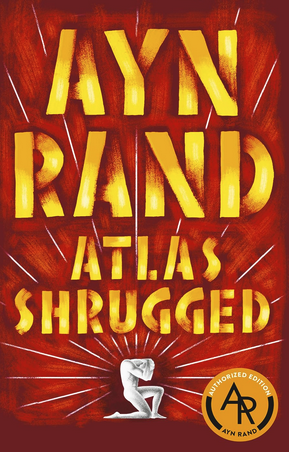
Atlas Shrugged
By Ayn Rand
Design Rebel: Apologetic to the Money Wad
This week’s moving narrative was sparked by a Joe Hudson coaching session featured in the This Got Me Thinking section below. Watching him ask a client to literally apologize to money inspired our own Rebel Onion coming face-to-face with the Money Man to clear the air.
Bringing a concept like this to life takes far more than a single prompt. While advanced tools accelerated the execution—using Leonardo.ai and Veo 3.1 for visual assets and ElevenLabs for the synthesized voice track—the real breakout happens in the post-production pipeline. Everything was manually assembled and edited frame-by-frame in Wondershare Filmora. AI powered the components, but the creative vision, script, and emotional intent remain completely hand-carved.
This Got Me Thinking:
It started with a random YouTube recommendation playing while I was busy loading the dishwasher. It was a coaching session with Joe Hudson, founder of The Art of Accomplishment, and it stopped me in my tracks. I’ve saved the exact timestamp in the video below where he introduces a radical concept: asking a client to literally apologize to money for all the heavy emotional projections she had placed on it. It’s an incredible insight that didn't just stick with me—it entirely inspired this week’s newsletter theme and our cinematic short. Enjoy.
P.S. If this resonates with you, share it with someone. I'm dedicated to helping fellow explorers—or anyone who found this page—uncover their authentic self with humor and insight. We're all in this together, finding the courage to truly live from our core essence (or as close as we can get!).
The Infinite Layer: There's Always Another Layer