
The Storage Layer - Learning to Rest Before You're Forced To
When Grinding Is All You Know
Onions store energy in their layers during dormancy, preparing for the next growth cycle. But what if you've been grinding so long you don't even know how to store anymore? What if rest feels like failure, and preservation feels like stagnation?
I've been waiting for the "breakthrough" to give myself permission to rest. But here's the problem: What if I burn out before I get there? And even if I do break through, will I know HOW to preserve energy—or will I just keep grinding out of fear of losing momentum?
The Grind Identity Crisis
I'd run to my room when my father got home from work. Not to greet him—to hide.
He'd walk in mad, and within minutes: "Go do your homework."
Even when homework was done, he'd find something. Mow the lawn. Organize the garage. Do SOMETHING. Just go to your room.
Wednesday and Friday nights were flight nights for my father at the freight company—late cargo releases, airline coordination. Saturdays and Sundays? Technically "off," but the phone never stopped. Problems. Delays. My father was always solving problems—he’d always say he was 'apagando incendios,' which in Spanish means he was constantly 'putting out fires'.
I learned early: Rest isn't productive. Rest is lazy. If you're not doing something, you're wasting time. "If you're not first, you're last." —Ricky Bobby.

Even now, at 48, that voice echoes. When my son naps and I sit down, I feel guilty. I scroll my laptop anxiously, thinking about the client project, the tech companies need, the newsletter, and what I should be building.
I've been grinding so long, I don't know who I am without it.
The Cruel Irony
My friends—the ones who vacation, who go to happy hours (I don't miss the bars, just the bond of the camaraderie), who rest—they all credit my father’s grind.
"I remember your dad did X, and that's how I've been doing things."
They learned the hustle. But they also learned to step back and enjoy what they built.
I only learned the first part.
They're in finance now. They're paid well. They take time off. They model what storage actually looks like.
And I'm still here, grinding, figuring out the next moves as an entrepreneur—a different game than the corporate stability they have.
The Paradox: You Need Storage NOW, Not Later
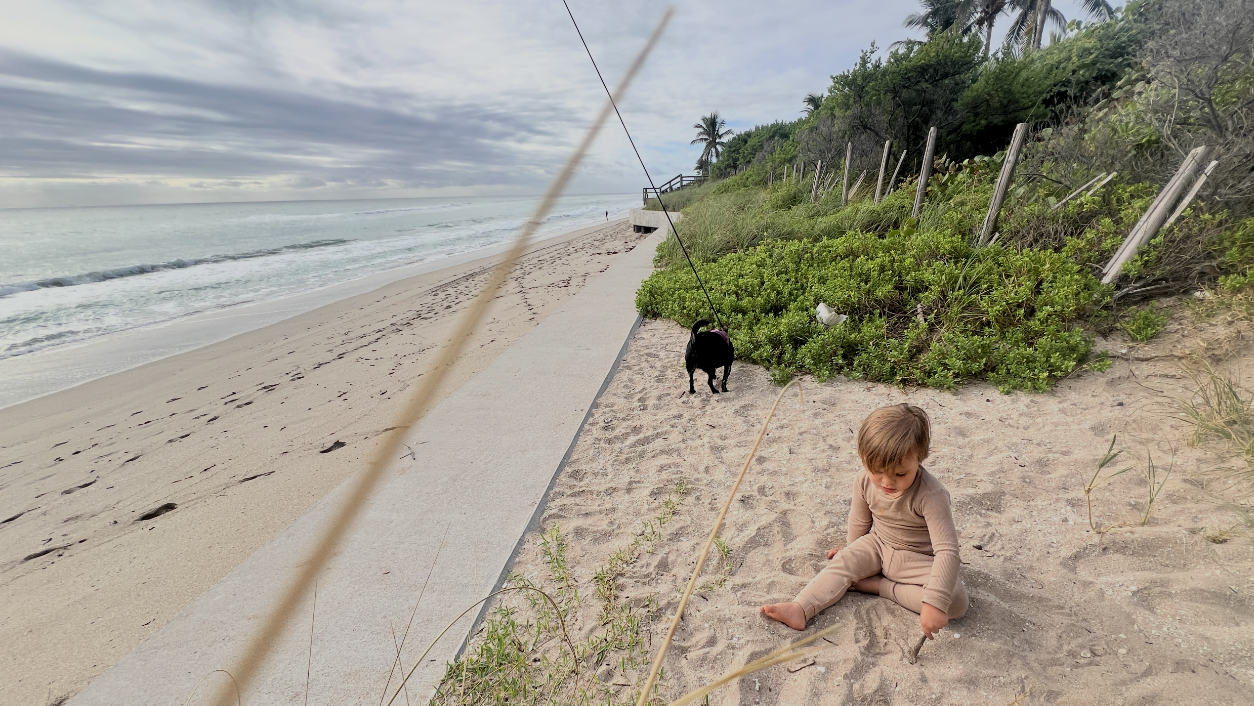
I used to wake up, meditate, do breath work. I'd walk my dog across the street to the beach—quietly, while the world slept. Prayers. Affirmations. Audio lessons. I'd watch the sunrise and feel like I was preparing my mind for the day ahead.
That was storage.
Now? Shorter beach walks. Time-crunched prayers. The discipline is still there, but the spaciousness is gone. It’s all part of adapting to life with our son—not complaining, just reality.
I'm storing on scraps.
I want to add cold plunge. Sauna. Morning runs. Watching the sunrise, not just walking past it.
But here's the block: I can't justify adding these until I "make it." Until the cashflow is consistent. Until I've proven I deserve to rest.
Here's what I'm learning the hard way:
Storage isn't something you do AFTER success. It's something you practice ON THE WAY UP.
Because if you don't learn it now, you'll burn through your breakthrough trying to prove it's real.
What Storage Actually Looks Like (And I'm Already Doing It)
Waking at 6am to write instead of staying up late. Charging higher than market value for design work. Saying no to cheap clients who drain my energy. Beach walks with my dog, even the shortened ones. Choosing to sleep when my son sleeps instead of pushing into late nights.
These aren't indulgences. They're strategic energy conservation.
But I don't SEE them that way. I see them as "not enough."
I'm so focused on what I'm NOT doing (the cold plunge, the sauna, the full morning routine) that I miss what I'm already preserving.
The System I'm Avoiding Building
I need systems that work without me. Tools that handle the repetitive work. People who can carry the load when I need space.
I don't want to be a slave to the grunt work. I want to manage, refine, elevate.
But building those systems requires TIME—which feels like the one thing I can't afford to spend.
Except that's the lie.
Building systems IS storage. It's preserving future energy by investing present energy wisely.
I'm just too scared to pause long enough to build them.
The Post-Breakthrough Fear
I raised my rates recently. Charged well above what I used to.
I celebrated a little. Then moved on.
Because one win doesn't mean consistency.
But here's what I'm really wrestling with: If I hit my financial goal tomorrow, what happens next?
My first instinct? Breathe. Smile. Recognize, I'm proud of myself. Stay quiet about it this time.
But then the preservation process kicks in. I won't want to lose momentum. I won't go back.
So will I ever actually REST? Or will I just find new reasons to grind?
What Trusting the Breakthrough Would Look Like
If the money came tomorrow, here's what I'd want: My wife stays home with our son. We travel—work travel AND vacation on our terms. We break out of traditional life structures. Our son grows up with the freedom we design. We work together, build together, vocation anywhere.
So I'm making this happen. Not out of fear—out of design. Out of commitment to the life I'm building for my family.
The Real Paradox
I used to think: I can't rest until I break through.
But the truth is sharper: I can't break through if I don't rest.
And when I do break through, will I trust it enough to actually preserve what I've built?
That's the real question. Not whether I can grind hard enough—I've already proven that.
The question is whether I can master the rest cycle before success forces me to learn it the hard way.
This Week's Peel
An onion doesn't apologize for dormancy. It doesn't hustle through winter. It stores energy underground, trusting the season, preparing for spring.
You don't learn to store energy AFTER success. You learn it on the way up.
Otherwise, you'll burn through your breakthrough just trying to prove it's real.
Storage isn't laziness. It's strategy.
Rest isn't weakness. It's preparation.
And maybe—just maybe—you're already practicing it more than you think.
The question is: Will you trust yourself enough to rest NOW, so the breakthrough can actually happen?
This week, notice: Where are you already practicing storage without realizing it? What systems could you build NOW that would preserve future energy? And what would it look like to trust the process enough to rest BEFORE you've "earned" it?
The "Being Coached" Layer: The Power of 'YET' and Conscious Re-engineering
Dr. Goodman opened by emphasizing the strategic importance of the three-letter word: YET. He stresses that stopping the insanity of the constant grind requires introducing flexibility and designing your schedule before the need arises. He modeled this by having blocked out time to not work for an upcoming seven-day vacation, and already scheduling his return—a conscious act of trusting the universe to provide.
The key to escaping the burnout is realizing the difference between making it happen and letting it happen. As long as you believe you are a prisoner, forcing the outcome, you are trapped. Freedom comes when you realize you are a receiver, allowing the breakthrough to happen so you can consciously paste it to your vision. Stop the insanity by choosing to re-engineer your approach: leverage collaborators to increase your capacity without increasing your workload, and use downtime (like looking back at last year's vacations) to design a future with more of what works.
Bookshelf Peeled - The Necessity of the Cold
Katherine May’s Wintering argues that we are not meant to be in "summer" year-round. Just as an onion goes dormant, humans must endure seasons of retreat, cold, and repair. The core lesson is that wintering is not a failure of the grind; it is a vital season of preservation. When we try to ignore our "winter" and push through with high-summer energy, we don't achieve more—we simply break.
The book’s most profound takeaway is that "Plants and animals don’t fight the winter; they prepare for it." Real storage means acknowledging when your energy is low and intentionally sinking into that dormancy to protect your core. By accepting the "winter" in your life or business, you aren't quitting; you are gathering the nutrients required to bloom when the season finally shifts.
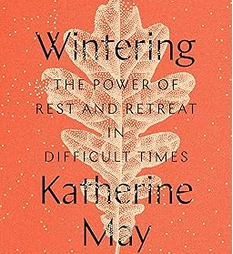
Wintering: The Power of Rest and Retreat in Difficult Times by Katherine May
Design Rebel: The "Always On" Trap
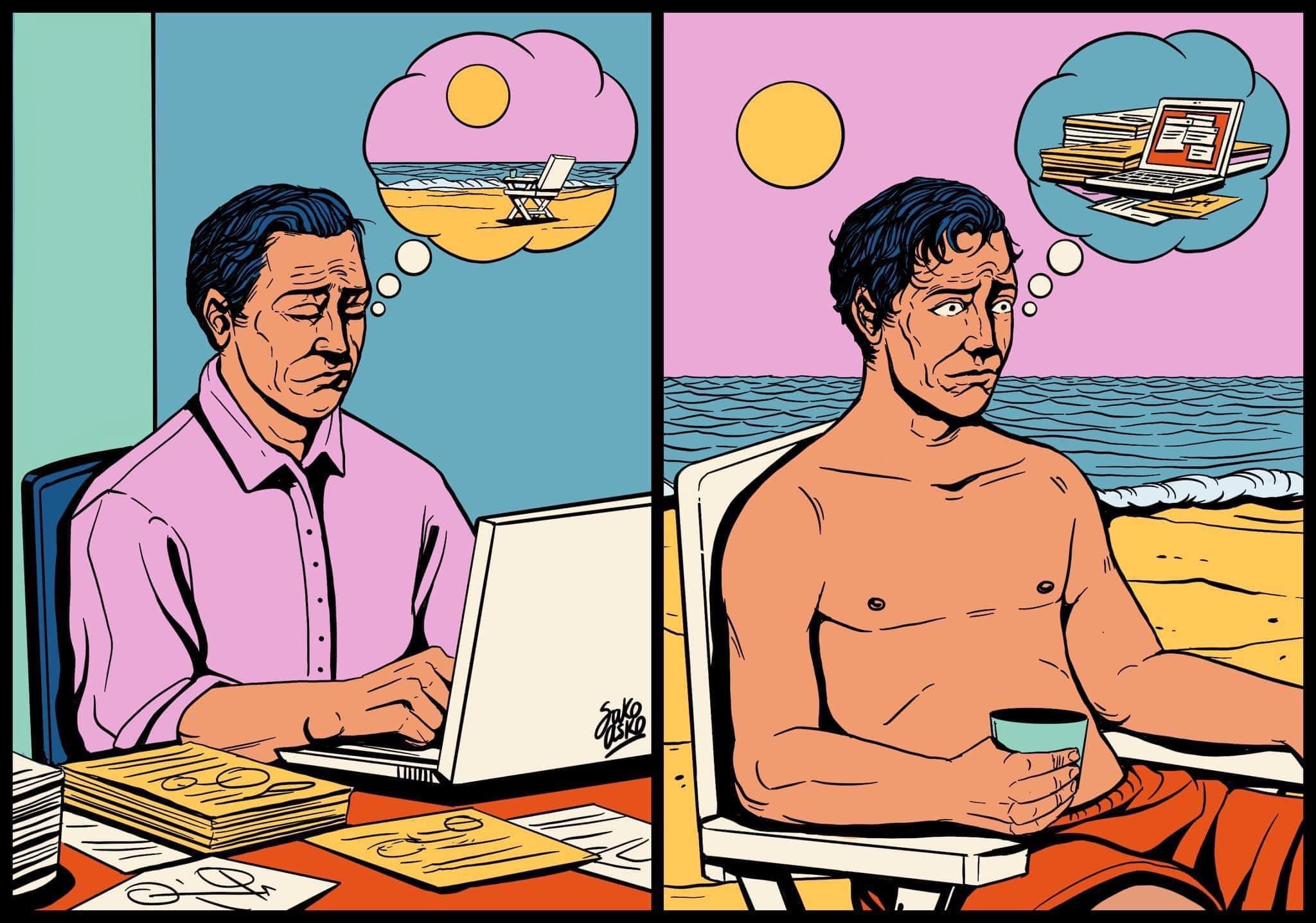
This week’s story explores the challenge of turning off work mode, even at the beach. The script was co-written with Gemini. I used Sora and Leonardo.ai for the art and video generation, along with Veo 3.1 for added motion. The voice was created using ElevenLabs, and the entire piece was edited and arranged with Wondershare Filmora.
Video AI by Martin Casado inspired by week 30
Weekly Inspired Insights I liked or found useful this week:
Clark Kegley has this great perspective on YouTube about the 'mountain' we climb. You spend seven years reaching the top, only to find more peaks waiting for you. His take on the burnout cycle and finding a new equation for purpose really hit home and served as a major spark for this week's edition. As he puts it:
"You run out of energy when you run out of future."
P.S. If this resonates with you, share it with someone. I'm dedicated to helping fellow explorers—or anyone who found this page—uncover their authentic self with humor and insight. We're all in this together, finding the courage to truly live from our core essence (or as close as we can get!).
The Gift Layer: What You Offer Simply By Being (Tentative)



Member discussion